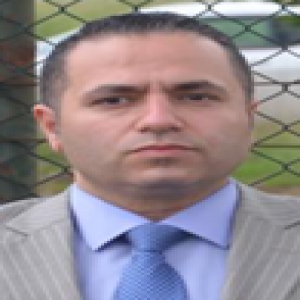
أنا  Sardar Ali


Vice Dean of Faculty of Science


اللقب العلمي

Vice Dean of Faculty of Science

2018-01-10

Administration principal

2017-02-01

In charge of Quality Assurance of Faculty of Science

2015-03-05

Assistant Lecturer

2014-11-25

البحوث العلمية

CMC Journal -Computers, Materials & Continua (القضية : 1) (الحجم : 79)
KurdSet: A Kurdish Handwritten Characters Recognition Dataset Using Convolutional Neural Network

Handwritten character recognition (HCR) involves identifying characters in images, documents, and various sources such as... See more

Handwritten character recognition (HCR) involves identifying characters in images, documents, and various sources such as forms surveys, questionnaires, and signatures, and transforming them into a machine-readable format for subsequent processing. Successfully recognizing complex and intricately shaped handwritten characters remains a significant obstacle. The use of convolutional neural network (CNN) in recent developments has notably advanced HCR, leveraging the ability to extract discriminative features from extensive sets of raw data. Because of the absence of pre-existing datasets in the Kurdish language, we created a Kurdish handwritten dataset called (KurdSet). The dataset consists of Kurdish characters, digits, texts, and symbols. The dataset consists of 1560 participants and contains 45,240 characters. In this study, we chose characters only from our dataset. We utilized a Kurdish dataset for handwritten character recognition. The study also utilizes various models, including InceptionV3, Xception, DenseNet121, and a customCNNmodel.ToshowtheperformanceoftheKurdSetdataset, we compared it to Arabic handwritten character recognition dataset (AHCD). We applied the models to both datasets to show the performance of our dataset. Additionally, the performance of the models is evaluated using test accuracy, which measures the percentage of correctly classified characters in the evaluation phase. All models performed well in the training phase, DenseNet121 exhibited the highest accuracy among the models, achieving a high accuracy of 99.80% on the Kurdish dataset. And Xception model achieved 98.66% using the Arabic dataset

 2024-04

TEM JOURNAL - Technology, Education, Management (القضية : 1) (الحجم : 13)
KurdSet Handwritten Digits Recognition Based on Different Convolutional Neural Networks Models

Abstract – Recognition of handwritten digits has garnered significant interest among researchers in the domain... See more

Abstract – Recognition of handwritten digits has garnered significant interest among researchers in the domain of recognizing pattern. This interest stems from the recognition's relevance in various real-life applications, including reading financial checks and official documents, which has remained a persistent obstacle. To address this challenge, researchers have developed numerous algorithms focusing on recognizing handwritten digits across different human languages. This paper presents a new Kurdish Handwritten dataset, consisting of Kurdish characters, digits, texts, and symbols. The dataset consists of 1560 participants, encompassing a broad and varied group. It serves as the primary dataset for training and evaluating algorithms in Kurdish digit recognition. We used Kurdish dataset named (KurdSet) and Arabic dataset for handwritten recognition, which holds 70,000 images of Arabic digits that were written by 700 various participants. Additionally, various models are utilized in the study, including ResNet50, DenseNet121, MobileNet, and a custom CNN (convolutional neural network). Additionally, the models' effectiveness was assessed through the examination of test accuracy, which measures the percentage of correctly classified digits in the evaluation phase.

 2024-02
Journal of Computer Science (القضية : 5) (الحجم : 19)
A Comprehensive Overview of Handwritten Recognition Techniques: A Survey

Abstract: Deep learning and deep neural networks, particularly Convolutional Neural Networks (CNNs), are rapidly growing... See more

Abstract: Deep learning and deep neural networks, particularly Convolutional Neural Networks (CNNs), are rapidly growing areas of machine learning and are currently the primary tools used for image analysis and classification applications. Handwriting recognition involves using computer algorithms and software to interpret and recognize handwritten text and drawings and has various applications such as automated handwriting analysis, document digitization, and handwriting-based user interfaces. Many deep learning models have been applied in the field of handwriting recognition and various datasets have been used to evaluate new computer vision techniques. This article provides an overview of the current state-of-the-art approaches and contributions to handwriting recognition using different datasets. Furthermore, the paper explains the most commonly used algorithms for recognizing handwritten characters, words, and numbers. Compares them based on their accuracy. This study covered different aspects and methods of machine learning and Deep Learning (DL) for handwritten recognition that showed different achievements for each.

 2023-04
European Scientific Journal (القضية : 2016) (الحجم : 12)
Comparing Common Programming Languages to Parse Big XML File in Terms of Executing Time, Memory Usage, CPU Consumption and Line Number on Two Platforms

XML files are used widely to save the information especially in the field of bioinformatics... See more

XML files are used widely to save the information especially in the field of bioinformatics about the whole genome. There are many programming languages and modules used to parse XML files in different platforms such as Linux, Macintosh and Windows. The aim of this report is to reveal and determine which common programming language to use and on which platform is better to parse XML files in terms of memory usage, CPU time consumption and executing time.

 2016-09
European Scientific Journal (القضية : 2016) (الحجم : 12)
Graphical User Interface in building attractive and successful website

The process involve in building a successful website goes beyond knowing web developing languages such... See more

The process involve in building a successful website goes beyond knowing web developing languages such as HTML and CSS.

 2016-05

المؤتمرات العلمية

IEEE
 2019-04
Engineering and Advanced Science

Engineering and Advanced Science

ورش العمل

Sophia University, Sophia, Bulgaria
2018-10
eGovernment

To apply eGovernment System to Kurdistan system.

 2018

الدورات التدريبية

2008-08-10,2008-09-10
Architecture of computer System

Attended workshop about ( Architecture of computer System) in Beirut, Lebanon

 2008