


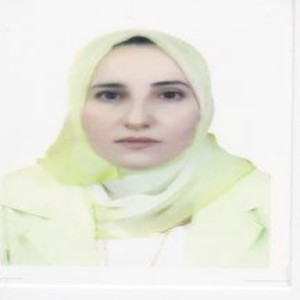
أنا  Wazeera Rashid Abdullah


Lecturer

التخصصات

Mycology

التعليم

PHD

Biology من Liverpool

2018

اللقب العلمي

Lecturer

2021-08-19

البحوث العلمية

Pakistan Journal of Phytopathology (القضية : 1) (الحجم : 25)
MYCOBIOTA AND OCHRATOXIGENIC BLACK ASPERGILLI ASSOCIATED WITH DRIED SEEDS OF SUMAC (RHUS CORIARIA L.) GROWING IN IRAQ

Seeds and powder of sumac (Rhus coriaria L.) is well known spice and has been... See more

Seeds and powder of sumac (Rhus coriaria L.) is well known spice and has been utilized by indigenous people at Kurdistan region of Iraq in many popular meals as well as in many medicinal purposes. The mycobiota of twelve sumac seed samples was examined after surface disinfection with sodium hypochlorite and plating on Dichloran Rose Bengal Chloramphenicol (DRBC) medium. Fungi were isolated and identified to species level and percentage contamination levels by fungi were calculated. The species of genera Apergillus Mich ex Fr.and Penicillium Link were the most frequently isolated fungal species from sumac seeds. The other genera included Eurotium Link ex Fr., Monilia Pers ex Fr., Neocytalidium Crous & slippers, Rhizopus Ehrenb, Sclerocleista Subram, Trichoderma Pers ex Fr. and Ulocladium Preuss. The highest isolation frequncy was displayed by the genera Aspergillus and Penicillium (100%) followed by Rhizopus (50%). The broadest species spectrum was found in the genera Aspergillus and Penicillium which were represented by 8 and 5 species respectively. Among eight species of Aspergillus, 4 species were identified in Aspergillus section Nigri. These include A.carbonarius, A.foetidus, A.niger and A. tubingensis. The most common species isolated were A. niger and A .flavus with a colonization percentage of 31.4 and 13.33% respectively. Among the predominant species of Penicillium, P. camemberti and P. glabrum with 9.33% and 5.0% iolation percentage respectively. Ochratoxigenic producing potential of two isolates of A. carbonarius was confirmed using ELISA method. Levels of ohratoxin A (OTA) produced by the two isolates on yeast extract sucrose agar ranged from 0.3-0.64 ng/g. Our study indicates possible hazards for humans upon consumption of sumac contaminated seeds by toxigenic moulds

 2013-01
Dohuk-University (القضية : 1) (الحجم : 13)
Taxonomic study on Penicilli from soil in Kurdistan region of Iraq.

A taxonomic study on the genus Penicillium of the family Trichocomaceae (Eurotiales):Ascomycota inhabiting soils in... See more

A taxonomic study on the genus Penicillium of the family Trichocomaceae (Eurotiales):Ascomycota inhabiting soils in Kurdistan region of Iraq was carried out using phenotypical and cultural characteristics. Twelve taxa have been identified . The identified species were P.aurantiogriseum, P.brevicompactum, P.camemberti, P.citrinum, P.corylophilum, P.digitatum, P.echinulatum, P.funiculosum, P.glabrum, P.roqueforti, P.rugulosum and P.variabile. A total of five species have been reported for the first time from Iraqi soil. The new records include P.aurantiogriseum, P.camemberti, P.corylophilum, P.echinulatum, and P.variabile. A brief description based on cultural and morphological characteristics is provided for each species. A dichotomous key in provided to facillate the identification of the reported species.

 2010-05
Dohuk-University (القضية : 1) (الحجم : 12)
Taxonomic study on black aspergilli from soil in Kurdistan region of Iraq.

A taxonomic study of Aspergillus section Nigri (formerly A.niger group) inhabiting soil at Kurdistan region... See more

A taxonomic study of Aspergillus section Nigri (formerly A.niger group) inhabiting soil at Kurdistan region of Iraq was carried out using phenotypical and cultural characteristics. Identification of the important and most common black aspergilli remains problematic due to the variability of phenotypic features. Five species of Aspergillus section Nigri have been identified. These include A.awamori, A.carbonarius, A.foetidus, A.japonicus, A.niger. The four former species are newly recorded for Iraqi soil. Abrief description based on cultural and morphological characteristics is provided for each species. A key is provided to facilitate the identification of the reported species

 2009-10
Mosul-University (القضية : 22) (الحجم : 23)
Taxonomic study on Aspergilli and their teleomorphs from soil in Northern Iraq

The teleomorphic genera were Byssochlamys (2 species), Chaetosartorya (1 species), Neosartorya (1 species), Eurotium (2... See more

The teleomorphic genera were Byssochlamys (2 species), Chaetosartorya (1 species), Neosartorya (1 species), Eurotium (2 species), and Emericella (2 species). The identified teleomorphs were: Byssochlamys fulva, B. nivea, Chaetosartoya cremea, Neosartorya fischeri, Eurotium amstelodami, E. chevalieri, Emericella nidulans and E.rugulosa.

 2009-04

الاطاريح

2013-10-01
Diversity and Roles of Mycorrhizal Fungi in the Bee Orchid Ophrys apifera

Mycorrhiza is a crucial symbiotic association between the roots of plants and fungi within the... See more

Mycorrhiza is a crucial symbiotic association between the roots of plants and fungi within the soil environment. The specificity in these partnerships, particularly of the fungal partner is still poorly understood. Orchids require symbiotic fungi in a mycorrhizal association for seed germination and establishment, typically species within the Tulasnellaceae and Ceratobasidiaceae. The distribution of suitable mycorrhizal fungi will therefore affect the distribution of orchid plants. The bee orchid (Ophrys apifera) is considered common in southern England but is less frequent in the north. It has a conspicuous flower spike with individual flowers resembling bees. The species is surprisingly common in urban reclaimed ground where rubble provides suitable well-drained, alkaline and low nutrient conditions.

 2013

المؤتمرات العلمية

Annual Conference of Microbiological Society
 2019-04
Analysis of orchid mycorrhizal fungal diversity in the soil of Bee Orchid (Ophrys apifera) using QIIME2.

Orchid seeds require a fungal symbiont for successful germination. The Illumina MiSeq platform was used to carry out analysis of the fungal community in the soil from around bee orchid plants (Ophrys apifera). Soil samples... See more

Orchid seeds require a fungal symbiont for successful germination. The Illumina MiSeq platform was used to carry out analysis of the fungal community in the soil from around bee orchid plants (Ophrys apifera). Soil samples from three sites on the University of Liverpool campus were investigated using Illumina amplicon sequencing of the ITS region to identify potential mycorrhiza fungi. The data were initially analysed using Qiime1, although this has not been officially supported since the end of 2017. Qiime2, the replacement, is the same as Qiime1, but with more features such as more streamlined workflows. Also, it is open source and tools can be added as plugins (https://qiime2.org). Taxonomic assignment was used for analysis of the read sequences to define Operational Taxonomic Units (OTUs). All sequences were clustered at 97% similarity and then reads were binned against a reference collection of the UNITE database which is a curated rDNA sequence database for Ascomycota and Basidiomycota and only involves high-quality sequences of well-identified fungi. There were significant differences between the fungal communities of the three sites as shown by using Kruskal-Wallis (KW) tests for comparing the alpha diversity of fungal OTUs within groups.

Annual Conference of Microbiological Society
 2016-08
Diversity and roles of orchid mycorrhizal fungi

Mycorrhiza is a crucial symbiotic association between the roots of plants and fungi within the soil environment. The specificity in these partnerships, particularly of the fungal partner is still poorly understood. Orchids require symbiotic fungi... See more

Mycorrhiza is a crucial symbiotic association between the roots of plants and fungi within the soil environment. The specificity in these partnerships, particularly of the fungal partner is still poorly understood. Orchids require symbiotic fungi in a mycorrhizal association for seed germination and establishment, typically species within the Tulasnellaceae and Ceratobasidiaceae. The distribution of suitable mycorrhizal fungi will therefore affect the distribution of orchid plants. The bee orchid (Ophrys apifera) is considered common in southern England but is less frequent in the north. It has a conspicuous flower spike with individual flowers resembling bees. The species is surprisingly common in urban reclaimed ground where rubble provides suitable well-drained, alkaline and low nutrient conditions.

Conference on Biology sciences
 2010-05
Taxonomic study on Penicilli from soil in Kurdistan region of Iraq

A taxonomic study on the genus Penicillium of the family Trichocomaceae (Eurotiales):Ascomycota inhabiting soils in Kurdistan region of Iraq was carried out using phenotypical and cultural characteristics. Twelve taxa have been identified . The identified... See more

A taxonomic study on the genus Penicillium of the family Trichocomaceae (Eurotiales):Ascomycota inhabiting soils in Kurdistan region of Iraq was carried out using phenotypical and cultural characteristics. Twelve taxa have been identified . The identified species were P.aurantiogriseum, P.brevicompactum, P.camemberti, P.citrinum, P.corylophilum, P.digitatum, P.echinulatum, P.funiculosum, P.glabrum, P.roqueforti, P.rugulosum and P.variabile. A total of five species have been reported for the first time from Iraqi soil. The new records include P.aurantiogriseum, P.camemberti, P.corylophilum, P.echinulatum, and P.variabile. A brief description based on cultural and morphological characteristics is provided for each species. A dichotomous key in provided to facillate the identification of the reported species.

Conference on Biology sciences
 2008-05
Taxonomic study on black aspergilli from soil in Kurdistan region of Iraq

A taxonomic study of Aspergillus section Nigri (formerly A.niger group) inhabiting soil at Kurdistan region of Iraq was carried out using phenotypical and cultural characteristics. Identification of the important and most common black aspergilli remains... See more

A taxonomic study of Aspergillus section Nigri (formerly A.niger group) inhabiting soil at Kurdistan region of Iraq was carried out using phenotypical and cultural characteristics. Identification of the important and most common black aspergilli remains problematic due to the variability of phenotypic features. Five species of Aspergillus section Nigri have been identified. These include A.awamori, A.carbonarius, A.foetidus, A.japonicus, A.niger. The four former species are newly recorded for Iraqi soil. Abrief description based on cultural and morphological characteristics is provided for each species. A key is provided to facilitate the identification of the reported species.

العروض التقديمية

Zakho / Duhok
2019-11
Diversity and Roles of Mycorrhizal Fungi in the Bee Orchid Ophrys apifera using Qiime2

Germination of orchid seed is dependent on mycorrhizal fungi to provide carbohydrates for energy via characteristic intracellular transfer organs (pelotons).

 2019
Zakho / Duhok
2019
Diversity and Roles of Mycorrhizal Fungi in the Bee Orchid Ophrys apifera using Qiime2

Germination of orchid seed is dependent on mycorrhizal fungi to provide carbohydrates for energy via characteristic intracellular transfer organs (pelotons).

 2025
Liverpool/UK
2018
Diversity and Roles of Orchid Mycorrhizal Fungi

What is Mycorrhiza? Both side benefit from this relation: The fungus gets carbohydrates. The plant gets higher absorptive capacity for water and mineral nutrients such as phosphorus and nitrogen. Most plants can form mycorrhiza Different... See more

What is Mycorrhiza? Both side benefit from this relation: The fungus gets carbohydrates. The plant gets higher absorptive capacity for water and mineral nutrients such as phosphorus and nitrogen. Most plants can form mycorrhiza Different types of mycorrhiza (arbusular mycorrhiza , ectomycorrhiza orchid).

 2025

ورش العمل

Liverpool University /UK
2019-04
R program for statistical analysis data.

R Studio for beginners to analysis DNA sequencing using statistical analysis program called R.

 2019
Liverpool University /UK
2019-04
R program for statistical analysis data.

R Studio for beginners to analysis DNA sequencing using statistical analysis program called R

 2019