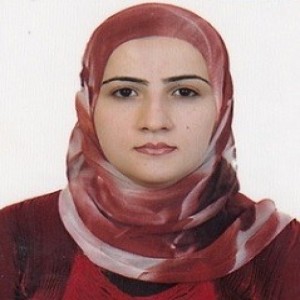
ئەز   Dilgash Shareef Alsilevani


Lecturer

Specialties

English and Kurdish phonology

Education

MA English language

University of Duhok لە University of Duhok

2012

BA English language

university of Duhok لە university of Duhok

2008

Academic Title

Lecturer

2018-05-20

Assistant Lecturer

2012-09-01

Published Journal Articles

Advances in Language and Literary Studies (Issue : 1) (Volume : 9)
An Investigation of Refusal Strategies as Used by Bahdini Kurdish and Syriac Aramaic Speakers

For the purpose of achieving a successful communication, issues such as the appropriateness of speech... See more

For the purpose of achieving a successful communication, issues such as the appropriateness of speech acts and face saving become essential. Therefore, it is very important to achieve a high level of pragmatic competence in speech acts. Bearing this in mind, this study was conducted to investigate the preferred refusal strategies Kurdish and Syriac native speakers use when faced with offers and requests from equal status interlocutors. The current study has used a modified Written Discourse Completion Test (WDCT) consisting of six situations (three of which elicit refusals to offerings and the other three to requests). Forty subjects participated in this study: 20 native speakers of the Kurdish language (10 male and 10 female students) and 20 native speakers of Syriac language (10 male and 10 female students). All participants are currently pre-graduate students attending Zakho University. The participants were asked to provide written data that express their refusals to these situations. The data collected have then been analyzed descriptively according to frequency and number of occurrences of semantic formulas used by Beebe et al (1990). The results showed that a) the Syriac Native Participants (SNP) s frequently preferred indirect and adjunct strategies for refusals rather than direct ones, b) the Kurdish Native Participants (KNP) s often preferred direct and indirect strategies more than adjunct ones, c) the results also revealed that gender has a great influence on the use of refusal strategies in various ways. Finally, this study concludes that both KNPs and SNPs tended to use more strategies when refusing requests than offers whereas …

 2018-01
Advances in Language and Literary Studies (Issue : 6) (Volume : 8)
Context and Linguistic Skills Factors Affecting the Pronunciation of Arabic Proper Names in Speakers of Bahdini Kurdish

The purpose of this research is to explore the pronunciation of Arabic proper names by... See more

The purpose of this research is to explore the pronunciation of Arabic proper names by Bahdini Kurds living in Duhok and the districts around. Thirty-two respondents were selected to say fifty Arabic proper names commonly used by Kurdish today’s society. The variables identified are linguistic skills in Kurdish and Arabic, and the extent of the formality of the context. The study concluded that being a fluent speaker of Arabic gives a Bahdini Kurdish speaker the ability to pronounce the Arabic proper names in a native-like accent. Yet, those speakers have revealed a tendency towards the use of a Kurdish pronunciation of such names when the context was informal. Dissimilarly, the Kurdish pronunciation was regularly used by speakers skilled or unskilled in Kurdish language and linguistics in both formal and informal situations.

 2017-12
Duhok university journal (Issue : 1) (Volume : 1)
Kurdish Personal Names in Kurdistan of Iraq: A Sociolinguistic Perspective

The paper tackles personal names among the Kurds in Kurdistan of Iraq and regards naming... See more

The paper tackles personal names among the Kurds in Kurdistan of Iraq and regards naming as an important aspect of the Kurdish society. The paper looks at the Kurdish names within the perspective of linguistics anthropology. It considers names as not being arbitrary labels but sociocultural tags that have sociocultural functions and meanings. It is found out that the Kurds have always given personal naming a great deal of importance generation after generation. They borrow personal names from different cultures due to religious, political and ideological reasons; however, they have always clothed them in the garments of their national ideology. It is also realized that the Kurdish names after the First World War became the mouthpiece of the Kurds' call for freedom, independence and revolution. The paper discusses the typology of Kurdish names. These include (1) family names (2) rhyme and rhythmic names,(3) unique names,(4) death prevention and survival names,(5) nature and place names (6) occupational and achievement names,(7) circumstantial names,(8) honorifics names,(9) beauty names,(10) flora and fauna names, and (11) non-Kurdish names.

 2011-07

Conference

International Conference on Kurdish Linguistics (ICKL_5)/ University of Graz/Austria
 2021-09
The role of sonority in the perception of Kurmanji Kurdish consonant clusters

Consonant clusters in Northern Kurmanji Kurdish spoken in Iraq are generally described to have maximally two consonants in syllable-initial (onset) and syllable-final (coda) positions. However, the existing descriptions of the phonology of this Kurdish dialect... See more

Consonant clusters in Northern Kurmanji Kurdish spoken in Iraq are generally described to have maximally two consonants in syllable-initial (onset) and syllable-final (coda) positions. However, the existing descriptions of the phonology of this Kurdish dialect are not consistent with respect to the status of a number of onset and coda combinations, that is, whether the sequences constitute actual clusters or if they are produced with an epenthetic vowel [6] [1] [3] [4]. The goal of this paper is to shed light on this issue. To that effect, the results of a perceptual study aimed at assessing the status of Kurmanji Kurdish consonant clusters are presented and discussed. The distribution of consonants in a cluster is known to be determined by the Sonority Sequencing Principle (SSP) [5]. According to the SSP, the sonority of consonants decreases the farther they are from the vowel or syllable nucleus (the sonority scale adopted in this study is Hogg and McCully’s (1987), shown in Table 1). There are, however, cases of consonant sequences that violate the SSP, despite their universal markedness [7]. Many such examples that violate the SSP are reported for Northern Kurmanji onset and coda clusters in [1]. They include onset sequences like fricative + stop (e.g. [spi] ‘white’), approximant + fricative (e.g. [lvin] ‘movement’), and nasal + fricative (e.g. [nveʒ] ‘prayer’) and coda sequences like fricative + nasal (e.g. [ʤaӡn] ‘celebration’), fricative + approximant (e.g. [bafɾ] ‘snow’), stop + approximant (e.g. [kakl] ‘core'), and stop + nasal (e.g. [tʰaqn] ‘mud’). In contrast, Shokri’s [1] extensive analysis of Kurdish consonant clusters involves only one combination that does not adhere to the SSP, namely fricative + stop for onset clusters. This discrepancy in the literature is partly due to differences in the theoretical and orthography-based analyses of Kurdish consonant sequences given in these works. In fact, different sources also disagree regarding the status of clusters that do not violate the SSP. To date, no experimental research has been conducted to test the actual status of onset and coda combinations in Northern Kurmanji Kurdish. This study, therefore, aims to settle the status of such sequences from the perceptual standpoint of native Kurdish listeners. In addition to the discrepancies in the literature, the study was also motivated by native Kurdish speakers’ intuitions that challenge the status of several clusters reported in [1] The perception of Kurdish onset and coda clusters is examined by means of a forced-choice goodness task with confidence ratings. In this task listeners were presented with two productions of the same word, one with a full epenthetic vowel and one without it (for example, [lvi] and [livi]). Participants were asked to select the option that sounds more natural or Kurdish-like, and then provide a confidence rating using a 6-point scale. The stimuli (totalling 15 words) were recorded by a female native speaker of Northern Kurmanji Kurdish, who produced several repetitions of the two versions of all the words, and the best tokens were selected by two trained phoneticians. A number of distractors involving other pronunciation variants were also included in the test. A total of 15 native Kurrmanji-speaking participants residing in Duhok governorate/Kurdistan region of Iraq participated in the perception task. Contrary to what is often claimed in the literature, the results reveal that cases with an epenthetic vowel, whether or not they violate the SSP, are perceived as more natural/native (Mean preference for the option with an epenthetic vowel = 84%, SD = 0.36) than cases in which the vowel is elided, and this has been backed up by high confidence ratings (Mean = 5.6 out of 6, SD = 0.91). Surprisingly, however, an onset cluster consisting of /s/+stop was perceived as more natural by all participants without an epenthetic (100% of the time). This result is inconsistent with what has been reported for other Kurmanji varieties. Production data are being currently analysed and may be discussed as well in light of the perception results. Keywords: Kurmanji Kurdish, consonant cluster, sonority sequencing principle. References 1. Hasan, A. M. (2009). Consonant clusters in Kurdish. Duhok University Journal, (1), 1-8. 2. Hogg, R. & McCully, C. (1987). Metrical Phonology: A Coursebook. Cambridge: Cambridge University Press. 3. Keshavarz, M.H (2017). Syllabification of final consonant clusters: A salient pronunciation problem of Kurdish EFL learners. Iranian Journal of Language Teaching Research, 5 (2), 1-14. 4. Omer, J.A.& Hamad, Sh,H (2016). Kurdish EFL learners’ strategies to break apart the different L2 onset consonant clusters. Raparin University Journal, 3 (7), 187-196. 5. Selkirk, E. (1984). On the major class features and syllable theory. In M. Aranoff, & R. T. Oehrle (Eds.), Language sound structure: studies in phonology presented to Morris Halle by his teacher and students (107–136). Cambridge, MA: MIT Press. 6. Shokri, N. (2002). Syllable structure and stress in Bahdini Kurdish. STUF-Language Typology and Universals, 55 (1), 80-97. Doi:10.1524/stuf.2002.55.1.80. 7. Yavaş, M. (2013). What explains the reductions in /s/ clusters: sonority or [continuant]? Clinical Linguistics and Phonetics, 27(6-7), 394-403

II AEDEAN Doctoral Seminar/University of Alicante/Spain
 2021-07
The Acquisition of English Consonant Clusters by Kurdish EFL Learners

Acquiring the phonological system of a second language (L2) is a challenge for adult L2 learners. Nevertheless, as a result of adequate input and formal pronunciation instruction, L2 learners may develop a more target-like L2... See more

Acquiring the phonological system of a second language (L2) is a challenge for adult L2 learners. Nevertheless, as a result of adequate input and formal pronunciation instruction, L2 learners may develop a more target-like L2 system (Flege, 1995). Therefore, the primary aim of this thesis is to investigate the acquisition of English onset and coda clusters by Kurdish EFL learners, exploring the role of formal instruction and experience. Kurdish consonant clusters consist of maximally two consonants, whereas English syllable structure is more complex, i.e., (CCC)V(CCCC), which poses a problem to Kurdish EFL learners. By contrast, Kurdish has a greater number of possible consonant combinations, including some that violate the sonority principle. However, the status of some of these sequences has not been settled (e.g. Shokri, 2002; Hasan, 2009) and Kurdish speakers have been reported to insert epenthetic vowels in English s+C clusters (e.g. Keshavarz, 2017; Omar & Hamad, 2016); Nasr, 2011). This study will test the tenets of the Structural Conformity Hypothesis (Eckman, 1991) and the Speech Learning Model (Flege, 1995). The first model predicts that those elements that are more marked will be more difficult to acquire while the Speech Learning Model highlights the role of L2 experience in L2 learning. Thus, this thesis will evaluate the production and perception of English clusters by two groups of Kurdish EFL learners differing in amount of L2 experience and formal instruction. The study will also contribute to the literature on Kurdish phonology, as a second aim of the study is to explore the perception and production of Kurdish consonant sequences whose cluster status needs to be experimentally settled. The L1 Kurdish study hypothesizes an overwhelming use and a perceptual preference for Kurdish consonant clusters with epenthetic vowels, regardless of the type of consonant combination. The L2 English study, on the other hand, predicts a significant role of increased L2 experience and formal pronunciation training with regard to the perception and production of English clusters. Participants will involve L1 Kurdish speakers for the L1 study and EFL Kurdish learners, differing in L2 experience and formal phonetic training, for the L2 study. The production tasks will involve reading a word list in a carrier sentence and naming pictures whereas a forced-choice goodness task with confidence ratings will be used in the perception experiment. References Eckman, F. R. (1991). The Structural Conformity Hypothesis and the Acquisition of Consonant Clusters in the Interlanguage of ESL Learners. Studies in Second Language Acquisition, 13(1), 23–41. https://doi.org/10.1017/S0272263100009700 Flege, J. E. (1995). Second Language Speech Learning: Theory, Findings, and Problems. In W. Strange (Ed.), Speech Perception and Linguistic Experience: Issues in Cross-Language Research (pp. 233–277). Timonium, MD: York Press. Hasan, A. (2009). Consonant clusters in Kurdish. Journal of Duhok University, 1, 1–8. Keshavarz, M. H. (2017). Syllabification of final consonant clusters: A salient pronunciation problem of Kurdish EFL learners. Iranian Journal of Language Teaching Research, 5(2), 1– 14. www.urmia.ac.ir/ijltr. Nasr, L. (2011). The interlangauge phonology of Kurdish learners: cases of vowel epenthesis, consonant deletion , and metathesis. (Unpublished master thesis). Duhok University. Duhok. Kurdistan of Iraq. Omar, J., & Hamad, S. (2016). Kurdish EFL learners ’ strategies to break apart the different L2 onset consonant clusters. Raparin University Journal, 3(7), 187–196. https://ojournal.uor.edu.krd. Shokri, N. (2002). Syllable structure and stress in Bahdini Kurdish. STUF - Language Typology and Universals, 55(1), 80–97. https://doi.org/https://doi.org/10.1524/stuf.2002.55.1.80.

4th Phonetics and Phonology in Europe: Phonetics and Phonology: Real-world applications/University of Barcelona
 2021-06
Examining the cluster status of Kurdish consonant sequences: A perceptual approach

Consonant clusters in Kurdish (particularly the Kurmanji regional dialect of Kurdish spoken in northern Iraq) are generally described to contain maximally two consonants in syllable initial (onset) and syllable-final (coda) positions. However, most of the... See more

Consonant clusters in Kurdish (particularly the Kurmanji regional dialect of Kurdish spoken in northern Iraq) are generally described to contain maximally two consonants in syllable initial (onset) and syllable-final (coda) positions. However, most of the readily accessible literature on this Kurdish dialect phonology provides discrepant descriptions regarding the cluster status of a number of onset and coda combinations, that is, whether the sequences constitute actual clusters or if they are produced with an epenthetic vowel [7] [1] [3] [4]. The aim of this study is to assess the cluster status of such sequences from the perceptual standpoint of native Kurmanji Kurdish speakers. The organization of consonant elements in a cluster usually tends to be governed by the Sonority Sequencing Principle (SSP) [6]. According to the SSP, the sonority of consonants decreases the farther they are from the vowel or syllable nucleus (the sonority scale adopted in this study is Hogg and McCully’s (1987), shown in Table 1). There are, however, cases of consonant sequences that violate the SSP, despite their universal markedness [8]. Many such examples that violate the SSP are reported for Kurmanji onset and coda clusters in [1]. They include onset sequences like fricative + stop (e.g. [spi] ‘white’), approximant + fricative (e.g. [lvin]‘movement’), and nasal + fricative (e.g. [nveʒ] ‘prayer’) and coda sequences like fricative + nasal (e.g. [ʤaӡn] ‘celebration’), fricative + approximant (e.g. [bafɾ] ‘snow’), stop + approximant (e.g. [kakl] ‘core’), and stop + nasal (e.g. [tʰaqn] ‘mud’). In contrast, Shokri’s [7] extensive analysis of Kurdish consonant clusters involves only one combination that does not adhere to the SSP, namely /s/ + stop for onset clusters. This discrepancy in the literature is partly due to differences in the theoretical, impressionstic and orthography-based analyses of Kurmanji clusters given in these works. In fact, different sources also disagree regarding the status of clusters that adhere to the SSP. To date, no experimental research has been conducted to assess the actual status of onset and coda combinations in the Kurmanji dialect spoken in northern Iraq. The perception of Kurmanji Kurdish onset and coda clusters was examined by means of a forced-choice goodness task with confidence ratings. In this task listeners were presented with two productions of the same word, one with a full epenthetic vowel and one without it. Participants were asked to select the option that sounded more Kurdish-like, and then provide a confidence rating using a 6-point scale. The stimuli, included 15 words, were recorded by a female native speaker of Kurmanji, who produced several repetitions of the two versions of all the words, and the best tokens were chosen by two trained phoneticians. A total of 15 native Kurrmanji- speaking participants , residing in the Kurdistan region of Iraq, took part in the task. The results of the perceptual task were analyzed in terms of the percentage of time participants chose the option with an epenthetic vowel as the preferred pronunciation. In most cases, the option with an epenthetic vowel was consistently perceived as more natural/native-like (µ = 84%, SD = 0.36) than the option in which the vowel was elided. This consistency was supported by high confidence ratings (µ = 5.6 out of 6, SD = 0.91). On the other hand, and in contrast to what has been claimed for the Kurmanji regional dialect spoken in neighbouring Turkey, the consonant sequence /s/+stop was perceived as more natural (100% of the time) when the epenthetic vowel was elided. This finding is in accordance with Öpengin & Haig’s [5] proposal that Kurmanji dialect lacks consistent strategies in handling initial clusters across its different regional variations. Nevertheless, the overall results of this study support the prediction that Kurmanji speakers in the Kurdistan region of Iraq will perceive, as more natural/native, consonant clusters with epenthetic vowels. References [1] Hasan, A. M. (2009). Consonant clusters in Kurdish. Duhok University Journal, (1), 1-8. [2] Hogg, R. & McCully, C. (1987). Metrical Phonology: A Coursebook. Cambridge: Cambridge University Press. [3] Keshavarz, M.H (2017). Syllabification of final consonant clusters: A salient pronunciation problem of Kurdish EFL learners. Iranian Journal of Language Teaching Research, 5 (2), 1-14. [4] Omer, J.A.& Hamad, Sh,H (2016). Kurdish EFL learners’ strategies to break apart the different L2 onset consonant clusters. Raparin University Journal, 3 (7), 187-196. [5] Öpengin, E., & Haig, G. (2014). Regional variation in Kurmanji: A preliminary classification of dialects. Kurdish Studies, 2(2), 143-176.. [6] Selkirk, E. (1984). On the major class features and syllable theory. In M. Aranoff, & R. T. Oehrle (Eds.), Language sound structure: studies in phonology presented to Morris Halle by his teacher and students (107–136). Cambridge, MA: MIT Press [7] Shokri, N. (2002). Syllable structure and stress in Bahdini Kurdish. STUF-Language Typology and Universals, 55 (1), 80-97. Doi:10.1524/stuf.2002.55.1.80. [8] Yavaş, M. (2013). What explains the reductions in /s/ cluster s: sonority or [continuant]? Clinical Linguistics and Phonetics, 27(6-7), 394-403.