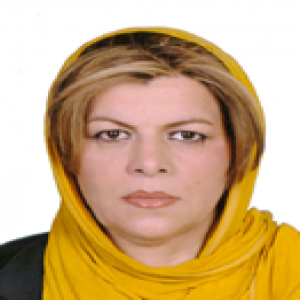
ئەز   Halima Ahmed Othman


Assistant lecturer

Specialties

Urban design

Academic Title

Assistant lecturer

2009-02-28

Published Journal Articles

International Journal of Urban Design and Development (Issue : 2) (Volume : 3)
Design for Revitalizing Historical Identity: Case Study Zakho Old Bazaar, Kurdistan Region, Iraq

Abstract A town in northern Kurdistan, near the border of Iraq, Turkey, and Syria converge,... See more

Abstract A town in northern Kurdistan, near the border of Iraq, Turkey, and Syria converge, Zakho was rural center and regional marketplace. The city exhibits remarkable sites dating to various eras, including Dalal bridge and Al-Qeshla, an ancient site with significant truistic attraction. Zakho has been a center of religious diversity, dynasty to Muslims, Christians, and Jews, which has significantly influenced the city’s rich urban environs and architectural heritage. The old bazaar’s architecture reflects multiple historical eras. Zakho old bazaar is located in the area where the river splits into two branches, forming an island. The historical value of the old bazaar relies in its unique architectural elements, materials, and crafts which formed specific cultural and architectural identity for the city. Due to the strategic location, the city had prolific urbanization process toward all directions. The old bazaar left abandoned and subjected to deterioration. In 2022, an initiative project was issued as a competitive design proposal and a detailed budget plan for revitalization of Zakho old bazar. This research focuses in the design phase of the old Zakho bazaar exploring sustainable urban design principles to make the design ready to be implemented. A contemporary design was proposed with special focus on the city’s culture and historical identity restoring the cherished cultural values and repurpose the abandoned commercial activities as initiative attempt for future development in the lavish old site. Keywords: Architecture, design, heritage, historical city, identity, old bazaar, cultural

 2025-07

Journal of Architectural Engineering Technology (Issue : 2018) (Volume : 7)
Architectural Identity Shaped by the Political System, Kurdistan Region Since 1991 as a Case Study

Abstract “We shape our buildings; thereafter they shape us” Winston Churchill 1943. The ruling Elites... See more

Abstract “We shape our buildings; thereafter they shape us” Winston Churchill 1943. The ruling Elites utilize meaning in architectural forms to exercise their political power to unite and or manipulate people, here architectural signification plays a major role in the nationhood in creating and reaffirming the cultural identity for societies. Kurdistan is a roughly defined geo-cultural region wherein the Kurdish people form a prominent majority population, and Kurdish culture, languages, and national identity have historically been based. Following the discovery and exploitation of oil, paralleled with investment law in 2004, Kurdistan witnessed a bulk boom in the construction industry. Kurdistan region became architecture playground. Most of the pilot projects were prepared behind boarders by various international architectural styles, diminishing the regions local identity. One of the areas that suffered from the previous control system is neglecting and deconstructing of architectural identity. The paper is based on case study and observations. An inductive method will be used to analyze pilot projects in Kurdistan and how they reflect the political system’s desires instead of the culture and identity of the region. Hence Architectural identity is shaped by the political system. The paper is using Kurdistan as case study following 1991 uprising after the creation of safety zone by UN. Projects from Erbil, Sulaimania, and Duhok will be analyzed to create a clear image for the main features of architectural identity’s dilemma within the current political system. Challenges and problems facing the development of the local architecture to be addressed; recommendations will conclude the paperwork. Keywords: Architectural Identity; Political system; Local identity; Kurdistan region

 2018-08
Developing Country Studies (Issue : 2014) (Volume : 4)
The Role of Investment Law in Housing Construction in Duhok City, Kurdistan Region

Abstract Duhok has a strategic location because it lies between two mountains ranges and at... See more

Abstract Duhok has a strategic location because it lies between two mountains ranges and at the junction of the borders of Iraq, in the heart of Iraqi Kurdistan Region. The city has a significant position from the dawn of history to the present time. In addition to the relative peace in the region, it has an advantage to develop the economy relatively fast in comparison to other parts of Iraq. Due to the above reasons, The City witnessed a rapid population growth during the last decades and the fast growing population led to further urbanization growth in the city. Duhok’s urbanization growth areas expanded at a rate 2.2 times faster than population growth, Giving rise to an increasing density of settlements and creation of informal settlement patterns, in addition to lack of new housing delivery systems. The Kurdistan Regional Government recognized that the regional government alone could not reconstruct Kurdistan without active participation from the private sector; therefore, Private investors especially from foreign resources been promoted to contribute towards economic development. The government, issued investment-law to remove any legal obstacles, focusing in construction sector especially housing projects. This paper discusses the role investment law in eliminating housing shortage in the city of Duhok to address the key bottlenecks in housing sector through better understanding of the potential and weaknesses of the existing situation. Keywords: Duhok city, Kurdistan Regional Government, Investment law, Housing, Population

 2014-11

Workshop

University of Zakho / Engineering College
2024-11
Challenges and Opportunities for Regeneration of Historic Urban Sites in Zakho and Duhok), in collaboration with the University of Duhok and local authorities

Highlighting the Importance of Heritage Site regeneration for Tourism in Zakho and Duhok. Emphasizing the Need for Revitalizing Heritage and Historic Sites and the Challenges Faced in Regeneration Plan in additional to Facilitating the Exchange... See more

Highlighting the Importance of Heritage Site regeneration for Tourism in Zakho and Duhok. Emphasizing the Need for Revitalizing Heritage and Historic Sites and the Challenges Faced in Regeneration Plan in additional to Facilitating the Exchange of Current and Future Programs for Heritage and Historic Site Regeneration.

 2024