


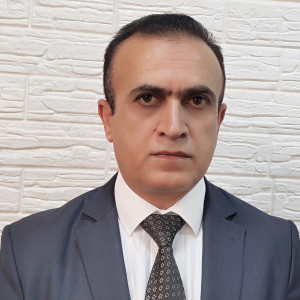


ئەز   Idrees Majeed Kareem


Assistant Lecturer

Specialties

Applied Physics

Education

Lecturer

Civil Engineering Department لە Zakho University

2025

Assistance Lecturer

Civl and Environment Engineering Department لە Zakho University

2021

Academic Title

Assistant Lecturer

2022-04-24

Awards

Certificate of Appreciation

2024-03
6Mar2024

In recognition for his role as a Excellent faculty member for the college of Engineering-University of Zakho

 2024

Edison International Competition for Inventions

2023-12
29 Nov 2023

Today, 11-29-2023, sponsored by the University of Zakho and in cooperation with the University of Sawah, the Edison International Competition for Inventions, Innovations and Creativity held its second international exhibition for patents and industrial models in Dohuk Governorate in the Independent Administration of Zakho at the University of Zakho and it was successfully opened

 2023

Published Journal Articles

International Journal of Radiation Research (Issue : 1) (Volume : 23)
An investigation of radon and heavy metal detection for cancer patients in Barji village, in the Iraqi Kurdistan region

Background : Exposure to radiological agents such as natural radon gas and consumption of heavy... See more

Background : Exposure to radiological agents such as natural radon gas and consumption of heavy metals in edible plants are two potential causes of unusual cancer in Berje village near Amedi town in Duhok city in the Iraqi Kurdistan Region. Material and Methods: Samples of soil, fruits, and vegetables were collected at various stages in the village, particularly at locations close to the homes of cancer patients. The collected samples underwent digestion and heavy metal absorption tests to detect ratio of heavy metal content as well as in their contents of radon. Results: showed that both heavy metals and radon gas in all samples were with different ratios. Moreover, results revealed that the evolution of radon ranged between 51.375 and 170.25 Bq.m - 3 , which is within the normal range of radon emission for soil sample. Similarly, results demonstrated that the average content of radon ranged between 0 and 24.1 Bq/kg in most fruits and vegetables which are within the allowable range. However, cadmium was found to be in marginal limits as target hazard quotient (THQ) for lead was greater than 1. Furthermore, bioaccumulation factors of tested fruits and vegetables were less than 1. Conclusion: The translocation of radon from soil to plants is only hazardous for tomatoes and common purslane. Furthermore, health risk index (HRI) of lead and cadmium was between 1 and 5, which indicates a threat to human health. The hazardous index (HI) was also larger than 1, which implies that heavy metals had significant non -carcinogenic effects on human health. The study found that the target cancer risk (TCR) of lead was low as results demonstrated that heavy metal content was within allowable range.

 2025-01
Environmental Research, Engineering and Managemen (Issue : 4) (Volume : 80)
Assessing Microclimate and Green Space at Nawroz University Using Climate Model ENVI-Met Simulation

Microclimates are important for understanding the impact of urban areas on the environment. Although often... See more

Microclimates are important for understanding the impact of urban areas on the environment. Although often overlooked, educational campuses cover large metropolitan areas that contribute to environmental harm in cities. This research focuses on studying the microclimate characteristics of Nawroz University’s campus in Duhok City, Iraq. The study uses ENVI-met software to assess current conditions and a proposed Green-Belt (GB) scenario. The analysis focuses on mean radiant temperature (MRT) and air temperature at four specific times (4 a.m., 8 a.m., 2 p.m., and 10 p.m.). A comparison is made between a Baseline scenario and a Green-Belt scenario. The Baseline scenario shows high temperatures on sun-exposed surfaces. The Green-Belt scenario demonstrates temperature reductions at 2 p.m. up to 8°C, highlighting the importance of vegetation in mitigating heat. Temperature reductions of 3°C to 5°C were also observed at 8 a.m., underscoring the cooling benefits of the proposed vegetation. The results from the Baseline scenario indicate that surfaces exposed to the sun with low albedo have higher temperatures. Vegetation in urban planning improves campus thermal comfort, reducing urban heat island effects. The study highlighted green infrastructure potential in creating sustainable urban environments, notably in regions transitioning to sheltered areas adjacent to trees.

 2024-12
Environmental Earth Sciences (Issue : 642) (Volume : 83)
Predicting groundwater drawdown in Zakho region, Northern Iraq, using machine learning models optimized by the whale optimization algorithm

Predicting groundwater drawdown is crucial to the Duhok Governorate’s sustainable management of its water resources.... See more

Predicting groundwater drawdown is crucial to the Duhok Governorate’s sustainable management of its water resources. To ensure long-term water availability as extraction from population growth and development intensifies, predicting drawdown helps to prevent overuse, provide a continuous supply of water, and enable effective planning for urbanization, agriculture, and industrial needs. In this work, a novel approach based on Multi-layer perceptron neural network (MLP), support vector regression (SVR), k-nearest neighbor algorithm (KNN), and extreme learning Machine (ELM) optimized by whale optimization algorithm (WOA) were proposed for estimating the total drawdown at Zakho region, Duhok Governorate, Northern Iraq for the first time. The input variables of the models include the rate of water extraction from the well (Q), well depth (D), and various meteorological parameters such as rainfall (R), evapotranspiration (E), Maximum Temperature (Tmax), and Minimum Temperature (Tmin). It is found that ELM showed the highest performance in modeling groundwater drawdown (R2=0.911, RMSE=5.674 m, and MAE=4.937 m). Moreover, the novelty of the research work is to enhance the accuracy of the individual models using two ensemble techniques including simple averaging ensemble (SAE) and weighted average ensemble (WAE). Based on the findings, the WAE technique increased the performance of individual models by up to 20%, proving the reliability of the WAE technique for groundwater drawdown prediction.

 2024-11
Egyptian Journal of Aquatic Biology & Fisheries (Issue : 5) (Volume : 28)
Assessment of Groundwater Quality in the Semel District of Duhok City, Iraq

This study aimed to assess the water quality in the Semel district of Duhok City,... See more

This study aimed to assess the water quality in the Semel district of Duhok City, Iraq, a key area for agriculture and animal farming. The physical and chemical parameters, including turbidity, pH, electrical conductivity (E.C.), total dissolved solids (T.D.S.), nitrate (NO₃⁻), total alkalinity (T. Al), total hardness (TH), calcium (Ca²⁺), magnesium (Mg²⁺), chloride (Cl⁻), sodium (Na⁺), potassium (K⁺), and sulfate (SO-4 ), were measured in 40 wells, which serve as the primary water source for the region. The results were compared with the World Health Organization (WHO) guidelines to assess compliance and safety. While most physical and chemical parameters were within safe limits, some samples showed elevated levels of NO₃⁻, T. Al, and T.H, exceeding the permissible limits for drinking water. The water quality index (WQI) values ranged from 19.8 to 39.59, classifying all samples as "Excellent" or "Good." The findings underscore the importance of continuous monitoring and management to ensure the safety and sustainability of groundwater in the Semel district. Groundwater resources play a crucial role in meeting the region's water demands, particularly for drinking, irrigation, and other domestic uses. However, the increasing reliance on groundwater necessitates regular assessments to evaluate its quantity and quality.

 2024-09
International Journal of Trendy Research in Engineering and Technology (Issue : 4) (Volume : 8)
REVIEW OF SOLID WASTE MANAGEMENT CHALLENGES AND SOLUTIONS IN IRAQ

Solid waste management (SWM) in Iraq faces significant challenges due to inadequate infrastructure, insufficient regulatory... See more

Solid waste management (SWM) in Iraq faces significant challenges due to inadequate infrastructure, insufficient regulatory frameworks, and low public awareness. This review explores the current state of SWM in various Iraqi cities, highlighting key issues and proposing recommendations for improvement. In Babylon Governorate, open dumping and poor collection processes are prevalent, with waste production expected to increase significantly by 2030. Kerbala's SWM system is hindered by limited funds, requiring better disposal and recycling infrastructure and stakeholder engagement. Al-Nassyriah residents expressed dissatisfaction with current SWM practices, indicating a need for increased public awareness and proper waste sorting infrastructure. Sulaimania faces environmental threats from open dumping, with seasonal variations in waste generation and inadequate medical waste management. In Erbil, substantial recyclable materials remain untapped due to a lack of efficient treatment technologies and public awareness. Najaf's exploration of waste-to-energy solutions presents a promising alternative for addressing waste management issues. This review underscores the necessity of developing modern infrastructure, enforcing stringent regulations, enhancing public education, and integrating waste management with energy production to achieve sustainable SWM in Iraq.

 2024-08
International Journal of Trendy Research in Engineering and Technology (Issue : 4) (Volume : 8)
REVIEW OF SOLID WASTE MANAGEMENT CHALLENGES AND SOLUTIONS IN IRAQ

Solid waste management (SWM) in Iraq faces significant challenges due to inadequate infrastructure, insufficient regulatory... See more

Solid waste management (SWM) in Iraq faces significant challenges due to inadequate infrastructure, insufficient regulatory frameworks, and low public awareness. This review explores the current state of SWM in various Iraqi cities, highlighting key issues and proposing recommendations for improvement. In Babylon Governorate, open dumping and poor collection processes are prevalent, with waste production expected to increase significantly by 2030. Kerbala's SWM system is hindered by limited funds, requiring better disposal and recycling infrastructure and stakeholder engagement. Al-Nassyriah residents expressed dissatisfaction with current SWM practices, indicating a need for increased public awareness and proper waste sorting infrastructure. Sulaimania faces environmental threats from open dumping, with seasonal variations in waste generation and inadequate medical waste management. In Erbil, substantial recyclable materials remain untapped due to a lack of efficient treatment technologies and public awareness. Najaf's exploration of waste-to-energy solutions presents a promising alternative for addressing waste management issues. This review underscores the necessity of developing modern infrastructure, enforcing stringent regulations, enhancing public education, and integrating waste management with energy production to achieve sustainable SWM in Iraq.

 2024-08
Engineering, Technology & Applied Science Research (Issue : 5) (Volume : 14)
Investigating Heavy Metal Contamination in Groundwater of Agricultural Areas: The Case Study of Shekhan, Duhok, Iraq

This study assesses water quality and heavy metal concentrations in 17 main groundwater sources in... See more

This study assesses water quality and heavy metal concentrations in 17 main groundwater sources in Duhok City, Iraq's agriculturally vital Shekhan area. It is important to comprehend the possible health concerns associated with heavy metal pollution in this area because of its relevance to food production. With an emphasis placed on heavy metal concentrations in groundwater sources to support public health and sustainable practices, this study provides essential insights into controlling water quality for irrigation and safe consumption. The Water Quality Index (WQI) results ranged from 15.23 to 37.05, indicating good and excellent water quality, well-suited for drinking and agricultural purposes. The results of heavy metals concentration from Copper (Cu), Manganese (Mn), Lead (Pb), and Nickel (Ni) ranged from 0.0002 to 0.0111 ppm, 0.0023 to 0.0187 ppm, 0.0006 to 0.0024 ppm, and 0.007 to 0.032 ppm, respectively. The World Health Organization (WHO) criteria were satisfied by all heavy metal concentrations in the water samples, except Cadmium (Cd), which exceeded the recommended threshold in six analyzed sources and varied from 0.0015 to 0.0158 ppm. The water is appropriate for irrigation and consumption, according to the findings of the heavy metal content analysis and water quality evaluation, while continuous monitoring is needed to guarantee optimum water quality.

 2024-08
Engineering, Technology & Applied Science Research (Issue : 4) (Volume : 14)
Assessment of Heavy Metal Contamination of Groundwater in Rural Areas of Duhok City, Iraq

This study investigates the quality of groundwater sources in the rural areas of Duhok City,... See more

This study investigates the quality of groundwater sources in the rural areas of Duhok City, Iraq, with a particular focus on heavy metal contamination, chemical composition, and properties of water. Water samples from 14 wells, serving as the main water source for the surrounding areas, were collected and analyzed. Water quality parameters including calcium (Ca².), magnesium (Mg².), chloride (Cl.), potassium (K.), and sulfate (SO4².) values ranged from 24 to 105.6 mg/L, 6.832 to 50.752 mg/L, 18 to 34 mg/L, 1 to 7 mg/L, and 3.4 to 38 mg/L respectively. Common heavy metals like manganese (Mn), lead (Pb), copper (Cu), and cobalt (Co) exhibited varying concentrations. Most parameters meet the WHO standards, except for the elevated potassium in one sample, requiring attention. Additionally, 50% of the sampled wells showed elevated cadmium (Cd) levels. Possible sources of contamination include industrial activities, agricultural runoff, and geological factors, highlighting the importance of ongoing monitoring and targeted interventions to ensure access to clean and safe water.

 2024-08
Engineering, Technology & Applied Science Research (Issue : 5) (Volume : 14)
Assessing Radon Exhalation Rates from Building Tiles: Implications for Sustainability and Indoor Air Quality

This study evaluates the radon-222 (²²²Rn) exhalation rates from building tiles commonly used in Duhok,... See more

This study evaluates the radon-222 (²²²Rn) exhalation rates from building tiles commonly used in Duhok, Iraq. Eighteen samples of tiles used for flooring and walls were collected and analyzed using the Airthings radon detector to measure the 222Rn levels. Surface exhalation (EA) and mass exhalation (EM) rates were calculated based on the measured radon concentrations. The results showed that ²²²Rn levels in the tile samples ranged from 2.96 to 46.99 Bq/m³, which is below the limit of 100 Bq/m³ recommended by the World Health Organization (WHO) for indoor air environments. Indian Pink Granite exhibited the highest radon emission rates among the tested materials, with an EA of 97.9 mBq/m²h and an EM of 9.79 mBq/kgh. These findings highlight the importance of considering both average radon concentrations and emission rates when selecting building materials. Although the immediate radon levels of these tiles are within safe limits, materials such as Indian Pink Granite, which have high emission rates, could potentially increase indoor radon levels over time. This underscores the need for comprehensive evaluations to ensure long-term safety. Identifying materials with high emission rates enables informed decision-making, supporting the sustainable selection of building materials. This approach helps mitigate indoor radon accumulation, improves air quality, and protects public health.

 2024-08
Egyptian Journal of Aquatic Biology & Fisheries (Issue : 3) (Volume : 28)
Investigating Groundwater Quality for Aquaculture and Agriculture in Chra, Duhok, Iraq: A Study of Heavy Metals and Radon

This study investigated the groundwater quality in the Chra district of Duhok, Iraq, an important... See more

This study investigated the groundwater quality in the Chra district of Duhok, Iraq, an important agricultural area, focusing on heavy metals and radon concentrations. Standard laboratory techniques assessed water samples from ten primary well sources for physical and chemical parameters. The presence of heavy metals was determined using a Shimadzu AA-7000 atomic absorption spectroscopy device, while radon concentrations (222Rn) were measured with a RAD7 radon detector. Results were compared with the World Health Organization (WHO) guidelines to assess compliance and safety. The calculation of the water quality index (WQI) took physicochemical parameters into account, including turbidity, pH, E.C, T.D.S, NO₃⁻, T. Al, TH, Ca²⁺, Mg²⁺, Cl⁻, Na⁺, K⁺, SO₄²⁻, and heavy metals such as Fe, Cu, Mn, Zn, Co, Ni, Pb, Cd, Cr⁶⁺, and Al. The WQI values ranged from 20.54 to 36.22, indicating water quality from good to excellent. Most heavy metal concentrations were within the permissible limits, except Pb and Cd, which exhibited minor variations. 222Radon concentrations in the water samples ranged from 1.75 to 7.38Bq/ L, all below the USEPA-specified limit of 11.1Bq/ L, suggesting a minimal radiological health risk. The study concluded with recommendations for sustainable water resource management, emphasizing the necessity for continuous monitoring and management to maintain groundwater safety and sustainability.

 2024-06
Journal of Advanced Zoology (Issue : 3) (Volume : 45)
Sustainable Solar Energy Development i n Zakho , Iraq : A Techno Economic And Environmental Assessment

This study presents a solar energy roadmap aimed at attracting investors to capitalize on the... See more

This study presents a solar energy roadmap aimed at attracting investors to capitalize on the abundant solar resources in Zakho, Iraq, for clean energy technology. The objective is to mitigate global warming effects caused by fossil fuel combustion and promote sustainable technological development. To end this, the study employs RETScreen Expert software to validate the techno economic and environmental viability of a gr id connected solar photovoltaic system utilizing climatic data from the Astronaut Office Information System (NASA) Database. Additionally, the Photovoltaic Geographical Information System (PVGIS) modeling method determines optimal angles for installing res idential rooftop Photovoltaic (PV) systems across selected locations. Results indicate that all selected locations are suitable for solar photovoltaic projects, with Rezgari identified as the optimal district due to its highest annual solar radiation of 18 63.117 kWh/m2 and the highest annual electricity production at 7905.38 kWh. The capacity factor (CF) values fall within the range of 17.395 17.574%. The study reveals an annual greenhouse gas (GHG) emissions reduction ranging from 6.9876 to 7.1123 (tCO2) a cross four districts. Considering the financial and environmental indicators, Rooftop Photovoltaic Systems emerge as a sustainable and efficient solution to enhance the environment and prove economically viable in Zakho City.

 2024-03
Engineering, Technology & Applied Science Research (Issue : 1) (Volume : 14)
Efficiency and Durability Assessment of Soil Stabilization using Waste Tire Shreds

The study aims to determine the concentration of radon to assess the radioactive risk in... See more

The study aims to determine the concentration of radon to assess the radioactive risk in groundwater in Bardarash, Kurdistan region, Iraq, which relies on groundwater as its primary source of water. Fifty samples were collected from wells for water use and were evaluated with RAD7-active Durridge Electronic Detector. Radon concentrations ranged from 0.93±0.43 Bq/l to 11.39±1.86 Bq/l, with a mean of 7.22 Bq/l and a standard deviation of 2.5. The results were used to estimate the annual effective doses of three categories. The annual effective doses of ingestion of groundwater ranged from 14.26 to 174.61 μSv/y with an average value of 110.73 μSv/y, 19.02 to 232.81 μSv/y with an average value of 147.67 μSv/y, and 4.41 to 54.05 μSv/y with an average value of 34.27 μSv/y, for infants, children, and adults, respectively. Furthermore, the annual effective dosage obtained in inhalation ranged from 2.34 to 28.70 μSv/y, with an average of 18.20 μSv/y. The total annual effective dose ranged from 16.60 to 203.31 μSv/y with an average value of 128.93 μSv/y, 21.35 to 261.51 μSv/y with an average value of 165.84 μSv/y, and 6.76 to 82.75 μSv/y with an average value of 52.48 μSv/y for infants, children, and adults, respectively. The majority of the samples had radon concentrations and effective dosages that were less than the maximum permissible limit of 11.1 Bq/l. This indicates that the majority of the samples are drinkable and safe to consume.

 2024-02
Journal of Advanced Zoology (Issue : 2) (Volume : 45)
Radiological Risk Assessment Of 222 Radon Concentration And Annual Effective Dose Calculation In Groundwater From Zakho, Iraq

Radon, the heaviest of noble gases in the periodic table, is a naturally occurring radioactive... See more

Radon, the heaviest of noble gases in the periodic table, is a naturally occurring radioactive nuclide found in rocks, soil, and water. It has gained increasing attention in recent research due to its association with cancer. This study focused on assessing the potential radioactive risks associated with water usage in Zakho, Iraq, by analyzing 16 groundwater samples collected from the primary water source. Alpha spectrometry with RAD7 and RAD-H2O accessories from Durridge CO was employed for assay purposes. The measured 222Rn concentrations ranged from 0.21 ± 0.1 to 19.75 ± 4.8 BqL−1 , with an average of 8.90 Bq. −1. The recorded values indicate that 31% of the data surpasses the specified United States Environmental Protection Agency (USEPA) limit of 11.1 BqL−1 . Notably, the evaluation of the total annual effective dose revealed significant age-related variations. Specifically, 62% of infant samples and 68% of children samples exceeded the acceptable limit of 100 μSv/y, while 25% of adult samples surpassed the World Health Organization (WHO) recommended threshold. The obtained data align with similar studies conducted globally, emphasizing the need for continuous radon monitoring during water consumption. The findings advocate for proactive measures to ensure the safety of these water sources, addressing the pressing concern of radon-related health risks

 2024-02
Engineering, Technology & Applied Science Research (ETASR) (Issue : 6) (Volume : 13)
Assessment of 222Radon Concentration and Annual Effective Dose in Drinking Water in Bardarash, Kurdistan Region of Iraq

The study aims to determine the concentration of radon to assess the radioactive risk in... See more

The study aims to determine the concentration of radon to assess the radioactive risk in groundwater in Bardarash, Kurdistan region, Iraq, which relies on groundwater as its primary source of water. Fifty samples were collected from wells for water use and were evaluated with RAD7-active Durridge Electronic Detector. Radon concentrations ranged from 0.93±0.43 Bq/l to 11.39±1.86 Bq/l, with a mean of 7.22 Bq/l and a standard deviation of 2.5. The results were used to estimate the annual effective doses of three categories. The annual effective doses of ingestion of groundwater ranged from 14.26 to 174.61 μSv/y with an average value of 110.73 μSv/y, 19.02 to 232.81 μSv/y with an average value of 147.67 μSv/y, and 4.41 to 54.05 μSv/y with an average value of 34.27 μSv/y, for infants, children, and adults, respectively. Furthermore, the annual effective dosage obtained in inhalation ranged from 2.34 to 28.70 μSv/y, with an average of 18.20 μSv/y. The total annual effective dose ranged from 16.60 to 203.31 μSv/y with an average value of 128.93 μSv/y, 21.35 to 261.51 μSv/y with an average value of 165.84 μSv/y, and 6.76 to 82.75 μSv/y with an average value of 52.48 μSv/y for infants, children, and adults, respectively. The majority of the samples had radon concentrations and effective dosages that were less than the maximum permissible limit of 11.1 Bq/l. This indicates that the majority of the samples are drinkable and safe to consume.

 2023-12
مجلة أبحاث في العلوم التربوية والإنسانية والآداب واللّغات العدد 28 الجزء الثاني (Issue : 28) (Volume : 2)
Modeling of Sustainable Solar Power System in Duhok City, Iraq: Techno-Economical, Environment and Feasibility Analysis

This research explores sustainable solutions to address environmental challenges arising from population growth and escalating... See more

This research explores sustainable solutions to address environmental challenges arising from population growth and escalating energy demand worldwide. The focus is on implementing Photovoltaic (PV) Systems in Duhok City, responding to the governorate's rapid expansion and heightened energy needs, coupled with soaring production costs. Employing the RETScreen expert for evaluation, the study reveals significant potential in the city for solar energy production, with an annual electricity generation estimate of 7737.1227 kWh and a capacity factor. The proposed PV system boasts a maximum annual electricity production at a significantly reduced cost of 0.0328 ($/kWh), presenting an economically viable alternative compared to the current city rates. Financial assessments support the conclusion that Rooftop Photovoltaic Systems can serve as a sustainable and cost-effective solution to enhance the environment in Duhok City.

 2023-12
Engineering, Technology & Applied Science Research (Issue : 5) (Volume : 9)
Surface and Deep Soil 222Rn Gas Exhalation Comparison

Abstract— In this study, 13 different surface locations and 20 mud samples were collected during... See more

Abstract— In this study, 13 different surface locations and 20 mud samples were collected during drilling, from one of the oil wells in the Kurdistan region of Iraq. The samples were taken at different well depths. RAD7 technique was used for finding the radon concentration. The smallest values in soil and surface were 14.12±8.59 and 16±4.24Bq/m3 and the highest were 93.25+21.72 and 137±8.76Bq/m3 respectively. The difference in the depth and surface formation shows the surface formation over depth ratio. The exhalation rate recorded value of the surface was generally higher than that of the depth formations. The exhalation results were finally compared with the recommended values of the International Atomic Energy Agency (IAEA) levels. The data show that it was less than the standards of IAEA.

 2019-10
Journals of UoZ (Issue : 2) (Volume : 5)
ESTIMATION AND CORRELATION ANALYSIS OF HEAVY METALS OF SOME WELL WATER IN ZAKHO CITY, IRAQ

ABSTRACT: This study was carried out to examine the concentrations of major heavy metals in... See more

ABSTRACT: This study was carried out to examine the concentrations of major heavy metals in fifteen different well water in Zakho City, Kurdistan Region, Iraq. The studied heavy metals were iron, copper, chromium, aluminum, cadmium, cobalt, nickel, manganese, zinc and lead. The results obtained in the studied area showed that copper, chromium, cobalt, zinc, manganese, aluminum, iron and lead were within the acceptable limits as recommended by WHO for water drinking. However, in all studied areas, cadmium and nickel were mostly founded to exceed the maximum permissible limit set by WHO. It is found that zinc and copper possess a very good positive correlation between each other. The results obtained in this study confirmed the groundwater pollution and hence it is not suitable for consumption without any prior treatment.

 2017-06

Thesis

2019-11-21
Determination of the Radiation Exposure from Naturally Occurring Radioactive Material (NORM) in Tawky/ Duhok Oil Field via Different Techniques

A Thesis Submitted to the College of Engineering/Mechanical Department / University of Zakho in Partial... See more

A Thesis Submitted to the College of Engineering/Mechanical Department / University of Zakho in Partial Fulfillment of the Requirements for the Degree of Master of Science in Applied Physics

 2019

Presentation

College of Engineering Seminar Hall
2023-11
Surface and Deep Soil 222Rn Gas Exhalation Comparison: A Case Study in Tawke, Duhok, Northern Iraq

Publishing article description regarding the article results that done thought this research with the discussion with attendance for the seminar .

 2023
College of Engineering Seminar Hall
2023
Risk Assessment of Outdoor Background Gamma Radiation at Duhok City, in Kurdistan Region, Iraq

Presenting the publishing research, with discussion the results of that article

 2025

Workshop

University of Zakho
2022-06
Bologna Process

Participate all the deans and head of the departments and rapporteur of departments with some other employ staff, learning how to Design, Learning Outcome, Study Programmer, the Autonomy and Funding, to know the whole information... See more

Participate all the deans and head of the departments and rapporteur of departments with some other employ staff, learning how to Design, Learning Outcome, Study Programmer, the Autonomy and Funding, to know the whole information regarding to the bologna process in the University of Zakho

 2022
Zakho University
2019-02
Multidisciplinary science, nanotechnology and engineering, Zakho University

Presented The risk of Radon Gaz and its affection on the human Environment

 2019

Training Course

2020-09-12,2020-09-13
Online webinar in water pollution: Risks and Treatment

Webinar

 2020
2020-08-08,2020-08-08
Environmental Impact Assessment of projects

Online Training course

 2020
2020-01-01,2020-09-01
Pedagogical Training for teachers professional development (30 ECTS)

Pedagogical Training Course

 2020
2019-12-02,2019-12-04
The ozone agreement and importing the effected Gas onto Ozone layer

Training Course of OZONE Agreement

 2019
2019-12-02,2019-12-04
The ozone agreement and the effect of importing prohibited refrigerants used in air conditioning and refrigeration equipment

ozone agreement course

 2019
2019-09-10,2019-09-19
GIS course

Training Course

 2019
2019-07-28,2019-07-29
General quality and laboratories quality criteria's

Training course

 2019
2019-07-28,2019-07-29
Principles of general quality and laboratories quality criterias

ISO-CERTIFICAT

 2019
2017-03-26,2017-05-31
Course of IETS in Duhok university

Training Course

 2017
2017-03-07,2017-05-04
IELTS PREPARATION COURSE

IELTS COURSE

 2017
2014-02-01,2016-05-08
 Many of Training courses, workshops, TV & radio interview in Duhok governorate, regarding to the environment and other subjects

TV Interview and training Course

 2014
2010-10-03,2010-10-07
Radiation protection course

Training Course

 2010
2010-06-28,2010-07-16
Ambient air, Water monitoring, Waste management and Waste Water Management in Germany.

Training Course

 2010
2010-02-15,2009-02-16
Detection of ionized radiation in Erbil

Training Course

 2010
2009-10-15,2009-10-25
Environmental management in Latvia

Training Course

 2009
2009-07-07,2009-07-09
MINI UBIS Basic training in Germany

Training Course

 2009
2009-02-15,2009-02-16
Detection of ionized Radiations in Erbil

Training Course

 2009
2009-01-04,2009-01-08
Project management in Jeyan Hotel – Dohuk

Training Course

 2009