


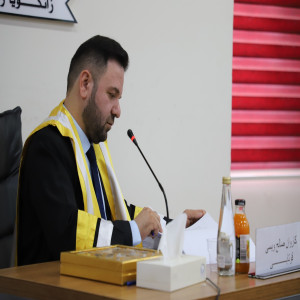


ئەز   Karwan Salih Waisy


Assistant professor

Specialties

International Relations & Politics (History) The US policy Towards the Kurdish question

Education

Ph.D. The U.S. policy towards the Kurdish Question in Iran

History department لە University of Zakho

2024

Mphil Master Degree West Asian Studies (International Relations &politics )

The National University of Malaysia لە The National University of Malaysia

2015

Bachelor of Arts (General History)

History department (College of Education) لە University of Duhok

2009

Membership


2019

2019-05-09,current
Member of Examination Committee

Faculty of Human Sciences

2018

2018-10-08,current
Member of Observing Faculty's Building

Member of Human sciences faculty

2018-10-01,current
History department

Rapporteur of department

Academic Title

Assistant professor

2024-07-14

Lecturer

2019-05-17

Assistant lecturer

2016-05-17

Published Journal Articles

International Journal of Kurdish Studies (Issue : 2) (Volume : 11)
Operation Provide Comfort for the Kurds in Iraq

The ethnic and religious uprisings against Saddam Hussein’s regime in Iraq were led by Shiite... See more

The ethnic and religious uprisings against Saddam Hussein’s regime in Iraq were led by Shiite Arabs in the South and Kurds in the North, incentivized by the U.S.A. and its allies. The uprisings lasted from March to April 1991 directly after a ceasefire creating a halt to the Gulf War. In both the North and the South, Saddam Hussein responded with massacres which created an internal refugee population. At that time, the United States activated their own intended political and humanitarian concept, Operation Provide Comfort. This was a three-phase operation with the purpose of aiding Iraqi Kurds to return to their homeland in Northern Iraq, and later to create a no-fly zone. The present study makes use of unclassified information from the United States Defense Technical Information Center (DTIC), such as documents, reports and memoirs. There is almost no attempt at assessment of the viewpoint of Kurdish reactions. Even the Peshmerga (Kurdish for “facing death”), guerilla organizations from the eighteenth century who at the time played a strong role in the North, seem to have been glossed over in the documentation. The conclusion of the present researcher(s) based on what is a one-sided documentation is a surprise and quite admirable!

 2025-09
ZANCO Journal of Human Sciences (Issue : 3) (Volume : 29)
The Administration of Bush’s Son Foreign Policy towards the Middle East 2001-2003: Afghanistan and Iraq as an Instance under the Light of Bush’s Speeches

Abstract This research which entitles “The administration of Bush’s son foreign policy towards the Middle... See more

Abstract This research which entitles “The administration of Bush’s son foreign policy towards the Middle East 2001-2003: Afghanistan and Iraq as an instance”, is studied a very crucial part of the foreign policy of the Bush’s son toward the Middle East. This research is used a number of significant documents and newspaper reports, which are relevant to the foreign policy of the Bush’s administration towards the Middle East. The terrorist attack of 11 September of 2001 imposed the US president, Bush’s son to put an end to the ancient policies of containment and initiative a new idea for the US to construct peace, stability and freedom through cultivating of democracy’s seeds. The administration of Bush’s son, greatly observed the democracy for the US national interests and the world peace also its reality. This study main aim is to explore the administration of Bush’s son believed it was the US responsibility to bring prosperity and peace to the civilization world, especially the Middle East. The Bush’s son administration foreign policy of the Middle East took two positions till to be capable to form freedom, friendly manner, peace, hope, stability and democracy in Iraq and Afghanistan. The Bush administration foreign policy to establish democracy within Iraq and Afghanistan in the Middle East did not stop. In other words, it effected on the Arab-Israel peace process as well. This article attempts to answer some critical questions for instance why after the terrorist attack of 11 September 2001 the US and the Bush’s administration directly declared war on terror? Why the war on terror forwarded the US to Afghanistan as well as Iraq? Why the US was impatient with prior efforts of the US foreign policy for generating the prosperity, peace and stability in the Middle East? Was The US foreign policy wisely contemplated on generating the democracy and showing local democracy? did the world unipolar give the US opportunities to take this effective force. As, the merely world power, it was in the US interests to protect its economic and alliances as well as making suitable circumstance in the desires of its leaders?

 2025-06
Kurdiyat (Issue : 11) (Volume : 1)
Ahmed Muftizade and His National and Religion Role in Eastern Kurdistan (1932-1993) A Historical Study

Ahmed Muftizade was one of the significant scholars and figures in Eastern Kurdistan. he played... See more

Ahmed Muftizade was one of the significant scholars and figures in Eastern Kurdistan. he played a key role through the press, religion, nationality, and politics. Additionally, he attempted through religious speeches to caution Kurds and pushed the Iranian government to recognize Kurds in Iran, likewise to give Kurds their national rights through spiritual means. He greatly attempted to unite Kurds and then gave their national demands to the Iranian government after the collapse of the Shah’s regime. As a result, he had a meeting with Kurdish officials and politicians. The main objectives of this article are to show Ahmed Muftizade's personality and explore his religious, national, societal, and political role in Eastern Kurdistan, as in his life stages, he had a significant effect on the area. Within its writing, this research attempts to answer some related questions, such as what religion, journalist, and societal role Ahmed Mufitizade had in Eastern Kurdistan? How were his relations with others? How did he affect people through his newspaper reports and religious speeches? Did he have relations with the Eastern Kurdistan leaders and politicians? How were his relations with the Iranian government?

 2025-06
Artuklu Kurdology (Issue : 1) (Volume : 19)
The Reflection of Zembilfiroş Epic Among the Kurds

The Epic of Zembilforş is one of the most well-known religion spiritual epic, which revealed... See more

The Epic of Zembilforş is one of the most well-known religion spiritual epic, which revealed the reality of Kurdish society life and it has a great reflection in the Kurdish history, as a result it has some different points regarding to its events, there are different manuscripts of Zembilforş epic wrote by Kurdish scholars. With the aim of showing the reality and influence of this epic among the Kurdish history events, this subject is being chosen to explore this historical epic scientifically. The main objective of this study is to depict the relevant events of this epic and its manuscripts in a scientific approach in order to show its reality, as many epacts of this epic are remained verbally. Within its writing this study attempts to answer some relevant questions relating to its events such as who was Zembilforş? Where its epic happened? What were the Kurdologist viewpoints on it? Where is its grave situated? How did the scholars look at this Kurdish epic reflection among the Kurds? There are how many manuscripts of Zembilforş epic? What are the oldest manuscripts of Zembilforş epic? Also from Results of this article appears that Zembilforş epic had religious structure and reflected among Kurdish greatly likewise it became a significance religious aspect in the Kurdish history.

 2025-03
Humanities Journal of University of Zakho (Issue : 4) (Volume : 12)
PRINTING ARABIC BOOKS IN EUROPE 1475 – 1710

This period of printing and translating Arabic books in Europe (1475-1710) is considered as a... See more

This period of printing and translating Arabic books in Europe (1475-1710) is considered as a “significant and preliminary phase” of printing books in Arabic language in Europe. Hence, this article is allocated to depict the printing books in Arabic language process. This article pays a great attention to the written language of Quran and Arabic grammar in Europe. This subject is been regularly ignored, and Kurdish academic institutions have begun to pay attention to it. As a result, this research attempts to clarify some historical development and new assessment of i. This study has taken most attention to the printing process, types of printings, and other aspects of it. The article uses some key articles and reports, which are published in English language. The objective of this research is to show the most important Arabic books that have been printed in Europe and the European aims of printing these books. Most of the Arabic books printed by Europeans were related to Islam and Arabic grammar. This raises key questions why European paid most attention to the printing and translating Arabic accounts. According to this premise, this research aims to answer some crucial questions that are related to this study, such as: Why the European paid most attention to printing and translating Arabic books? What subjects and issues were these books related to? Were Europeans seeking to benefit from those books, or were they attempting to critique Islam and the Arabic language? Did the printing and translating Arabic books have effects on the emergence of ideas in the Arabic World?

 2024-12
Koya University Journal of Humanities and Social Sciences (Issue : 2) (Volume : 7)
The U.S. Policy to the Kurdish Question in Iran 1960-1963 A Historical and Documentary Study

Abstract The Kurdish National Liberation Movement in Iran is one of the significance stages of... See more

Abstract The Kurdish National Liberation Movement in Iran is one of the significance stages of the Kurdish national movement in the Middle East particularly this period under this study, as this period is considered to be the beginning of the Kurdish national movement in Iran and their efforts to obtain the United States (U.S.) support of their issue and the U.S Policy to the Kurdish question. Hence this period is being taken into an account in order to examine the Kurdish situation and their question in Iran also the U.S. evaluation of the Kurdish national movement in Iran and the role of Kurdish movement in gathering the US and Iranian so closely. This study attempts to show the behavior of regional power especially Iran with Kurdish question and examine the politics and evaluation of the U.S. officials considerably its Central Intelligence Agency (CIA) and department of State towards Kurds likewise the role of great powers namely Soviet in this context, cause the Soviet played a key role in the context of the U.S. evaluation of the Kurdish question in Iran. In this regard This study aims to answer some relating questions such as how did the Kurdish leader’s efforts to get the U.S. support their national cause? how strong was the Kurdish question at that time? How was the Kurdish national movement influenced Iran during this period? Did the Kurdish question affect the U.S. interests? What was the soviet role in the Kurdish question?

 2024-12
Kurdiname (Issue : 11) (Volume : 11)
شۆره‌شا شێخ عوبه‌یدۆڵاهێ نه‌هرى وسیاسه‌تا به‌ریتانیا 1880-1883 :خواندنەکا مێژووى و بەڵگەنامەیى

شۆڕەشا شێخ عوبه‌یدۆڵاهێ دهێته‌ هژمارتن ب ئێكه‌مین شۆره‌شا نه‌ته‌وه‌یى یاكو تێدا بزاڤ هاتین كرن ئێكگرتنه‌ك كوردى ل سه‌ر بناغێ نه‌ته‌وه‌یى ل ده‌ڤه‌رێ بهێته‌دورستكرن ژبۆ رزگاركرنا كوردستانێ. ژبه‌ر هندێ، بایه‌خ زێده‌ گرنگ و هه‌ستیار ب هه‌مى لایه‌نێن ئه‌ڤێ شۆره‌شێ ژلایێ ده‌ستهه‌لاتدارێن ده‌ڤه‌رێ و نۆێنه‌رێن به‌ریتانیا هاتیه‌ دان. ژبه‌ر گرنگیا ئه‌ڤێ قۆناغێ، ئه‌ڤ لێكۆلینه‌ك دێ بزاڤێ كه‌تن چه‌ندین لایه‌نێن باخه‌دار یێن گرێدایى ب شۆره‌شێ ڤه‌ ب تێروانینه‌ك زانستى شرۆڤه‌ بكه‌تن. هه‌لبه‌ت بۆ ئەڤێ مه‌به‌ستێ مفا ژ هنده‌ك ژێده‌رێن گرنگ یێن ب ئەڤى ماوه‌یڤه‌ گرێدایى هاتیه‌ وه‌رگرتن. ئارمانجێن ئەڤێ شۆره‌شێ مه‌ترسى ئێخسته‌ سه‌ر هه‌ڤسه‌نگیا هێزێ ل ده‌ڤه‌رێ. له‌وڕا هه‌ر زیكا روویدان و پێشهاتێن ئه‌ڤێ شۆره‌شێ سه‌رنجا ده‌وله‌تێن هه‌رێمى و نێڤده‌وله‌تى، ب تایبه‌تى به‌ریتانیا ڕاكێشا و ئه‌ڤ چه‌نده‌ بۆ ئه‌گه‌رێ هندێ كو به‌ریتانیا ژى هه‌لۆیست و سیاسه‌تیێن خۆ ل دۆر مه‌ترسى و بوویه‌رێن وێ بۆ ڕایا گشتى یا ده‌ڤه‌رێ دیار بكه‌ن. ئەڤ ڤەکۆلینە دێ هەولدەت بەرسڤا هندەک پڕسیارێن گرنگ یێن گرێدایى ب مژارێن ئەڤێ شۆڕەشێ ڤە مینا ئەو چ هۆکاربوون شێخ عوبەیدوڵڵاهێ نەهرى پالداین دەست ب شۆڕەشێ بکەت و هزروبیریێن بەریتانیا لدۆر چەوا بوون؟ ئارمانجێن ئەڤێ شۆڕەشێ چ بوون و بەڕیتانیا چەوا بەڕێخودا پێشهاتێن ئەوێ؟ پەیوەندیێن شێخى دگەل بەڕیتانیا چەوابوون و بەڕیتانیا ب چ شێوازێ سیاسەتێ سەرەدەرى دگەل ئەوى دکر؟ هەلۆیستێ بەڕیتانیا بەرامبەرى روودانێن شۆڕەشێ چەوا بوون؟ ئایە بەڕیتانیا ڕۆڵ دشکاندنا ئەڤێ شۆڕەشێ دا هەبوو

 2024-11
The Arab Journal of Humanities and Social Studies (Issue : 1) (Volume : 1)
The Political Parties and Groups in Iraqi Kurdistan Region

Abstract Kurdistan is separated; correspondingly the Kurdish people are not united geographically. They are divided... See more

Abstract Kurdistan is separated; correspondingly the Kurdish people are not united geographically. They are divided among various political parties and organization groups in a number of different countries in the Middle East. After the 1920s, the Kurds attempted to construct the Kurdish national movement to liberate and united parts of their country in the Middle East. But they were unsuccessful since they were divided among a number of countries in the region and those countries used forces against their efforts and destroyed their ambitions. However, the contemporary Iraqi Kurdish political parties began to emerge after the Second World War. In the Cold War period, Iraqi Kurdish movements have gained momentum politically, economically, and socially. In addition to at the regional and international levels. The present study might be a largely preponderant one for the Iraqi Kurdish ambitions. This article is attempting to show Iraqi Kurdish political parties and groups as well as their national goals. This article outlines the history and genesis of Kurdish political parties and groups in Iraqi Kurdistan. This study presented a significant amount of certainly not published details about these parties. Precise attention is given to link between various groups, their splinter into new parties. This study is a historical research based on qualitative analyze of perspective from various actors .This study is used Kurdish and non-Kurdish perspective sources.

 2024-11
Nûbihar Akademî, (Issue : 22) (Volume : 22)
The Kurds in the British Kurdologist Major Soane’s Views

The western Kurdologists especially British played a key role in showing the Kurdish history and... See more

The western Kurdologists especially British played a key role in showing the Kurdish history and their condition of political, economic, society and Language, as they left among the Kurds and witness their conditions, the attempted to master the Kurdish language as they desired to have knowledge on the Kurdish situations so they wrote all aspects that related to the Kurdish situations from their views, one of these British Kurdologist had played significant role on writing the Kurdish and their language is Major Soane, his position among the Kurdologist is greatly appeared, as a result this subject is being chosen to show his viewpoints on the Kurds. The main objectives on this study is to depict Major Soane’s point of views upon the Kurdish conditions and language as he paid much attention on these aspects. Within its writing this study attempts to answer some key questions that related to this subject such as Major Soane’s point of views on the Kurdish situation? How he viewed the Kurds and their socio-political situation? What were major Soane’s objectives behind of publishing Peshkawtin (development) newspaper? Why Major Soane learnt Kurdish Language? How he viewed the Kurdish women for instance Adala Khanim?

 2024-01
Zanco Journal of Human Sciences (Issue : 27) (Volume : 27)
The U.S. Attitude to the Kurdish Question in Iran 1942-1959: A Historical and Documentary Study

Abstract The Kurdish National Movement in Iran is one of the significance stage of the... See more

Abstract The Kurdish National Movement in Iran is one of the significance stage of the Kurdish national movement in the Middle East particularly this period under this study, as this period is considered to be the beginning of strengthen Kurdish national movement in Iran and the U.S attitude to the Kurdish question in Iran. Hence this period is being taken into an account in order to examine the Kurdish situation and their question in Iran also the U.S. evaluation of the Kurdish national movement in Iran and the role of Kurdish movement in gathering the US and Iranian so closely. In this regard this study aims to answer some relating questions such as how strong was the Kurdish question at that time? How was the Kurdish national movement influenced Iran during this period? Did the Kurdish question affect the U.S. interests? What was the soviet role in the Kurdish question?

 2023-12
The Journal of Duhok University (Issue : 1) (Volume : 24)
KURDISTAN IN THE EASTERN QUESTION STAGES 1813-1867: “MISTAKES AND CORRECTIONS” A HISTORICAL STUDY

This period has been chosen for this study is one of the most sensitive and... See more

This period has been chosen for this study is one of the most sensitive and awkward stages of Kurdistan history, on the ground of that during this era the eastern question was moved on the terrible direction and Kurdistan was under this challenge, because in the one side some Kurdish emirate attempted to revolt to get independence, on the other side, the grate powers were in challenging to get their economic and political position. In this challenging and competing Kurdistan played a great role in the Eastern question, because of this question some key events of Kurdistan’s history were recorded by European travelers and Kurdish also foreign historian inaccurately. As a result, Kurdistan history became ambiguity. Hence, this research is being allocated for this period with the aim of correcting these mistakes and show these neglected authentic events. This research is being divided into an introduction, background, four sections and a conclusion. In its introduction, this study sheds light on the importance of study, objective, references and methodology, which are being used. The background of study concentrates on how Kurdistan moved on into the Eastern question. Furthermore, it spells out the importance of Kurdistan to great powers upon how and for what purpose the superpowers looked at Kurdish areas. Additionally, on the fate of Kurdish emirates in this competition, the first section of this study explores the inauthentic events of the fate of Soran principality and makes authentication. Second section of this research sheds light on the situation of Baban emirate as well as its destiny. In its third section this study illustrates the effectiveness of moving the Eastern question into Kurdish areas, particularly Botan emirate and the Russian moving into it, as it was a key factor also effective instrument of the great power attitude to the region as well as making correction of this emirate in this challenge. The fourth section of this research examines the influence of the Eastern question on other Kurdish emirates from 1842 to 1867 and it attempts to make authentication of these mistakes has been written. Its conclusion spells out these results, which its author has discovered. KEY WORDS: Kurdistan, the Great Powers, Emirates, Eastern Question, political and religious intervention

 2021-04
Koya University Journal of Humanities and Social Sciences (Issue : 2) (Volume : 3)
Analysis of The Development of Racist Nationalist Thought in Germany 1920-1945

National sentiment grew in Europe in general and in Germany in particular in the second... See more

National sentiment grew in Europe in general and in Germany in particular in the second half of the nineteenth and twentieth centuries, and the growth of this feeling, in turn, led to the emergence and growth of a more lively, deeper, and influential sentiment, which is the passion of solidarity between members of the same nation. But what raises the sensitivity of the excessive growth of the sentiment of solidarity is the issue of its accompanying the growth of the feeling of national dignity and national honor, and the sense of the national destiny of race, gender, sect, and other names listed so great that it has reached the point of denying all the rights of the other - of course - whether within the borders of the country or hostility to a geographically defined state on this narrow basis of closed racism with its component. And at the same time, the desire to impose the primacy and eligibility of national characteristics grew from the simplest forms of difference between nationalities, including shape and gender, for example, to the most complex and deepest aspects of other differences, some of which relate to traits outside of control. The issue of emphasizing the importance of national feeling and imposing it in full view of other foreign elements present in the same country, which caused the emergence of a crisis that accepts the other or the different nationalities. The meaning of the concept of nationalism has disappeared with time and has not been defined or reappeared until our days. This is only due to the different mentalities that view the concept of nationalism. Therefore, the complexity, ambiguity, and ambiguity are still under the pens of thinkers and those interested in studying the nation and national sentiment.

 2020-12
Zanco Journal of Humanity Sciences (Issue : 5) (Volume : 24)
Ottoman Kurdistan during the Golden age of the European exploration 1835-1831

This period under this study is beign written, is one the most significant and sensitive... See more

This period under this study is beign written, is one the most significant and sensitive stage of the Ottoman Kurdistan history. As, during this period some key political, military and transtions have taken place, they became a main stream of occurring some influential events in the area as a result the situation of the area turned out to be more sinsetive and unstable. Hence, these transtions encouraged the European explores who had already attempted searching in the area with the aim of protecting. Consequently, this period has beign choosen in order to depict that development explored by European travellers accurately. This research is used some relevant useful references. This study is beign divided into an introduction, overviewm four sections and an inclusion. In its introduction, the study attempts to shed light on the importance, objectives, problem statement, method and references of it. Afterwards, its overview shows the ignorance travellers and re-conducting of explors between 1821 and 1831; furthermore, in its endeavours, this research in its first section clears up the golden age of European explors from 1832 to 1834, the second section of this study relevantly depicts the military and missionaries exploring, this section examines re-taking of the Ottoman Kurdistan from 1834 to 1835 carefully and deeply.Moreover, in its fourth sections, this study demonstrates the initiative attacks on Kurds in 1834 and the limities of Diyarbakir's mirs powers . Its conclusion shows these outcomes that its author has discovered.

 2020-10
Journal of Duhok University (Issue : 1) (Volume : 22)
THE REGIONAL AND INTERNATIONAL ATTITUDE TO THE GENOCIDE OF KURDS IN IRAQ FROM MARCH 1975 TO SEPTEMBER 1988

ABSTRACT This study is entitled, '' The Regional and International Attitude to the Genocide of... See more

ABSTRACT This study is entitled, '' The Regional and International Attitude to the Genocide of Kurds in Iraq from March 1975 to September 1988 ''.Its noteworthy to point out that genocide is one of the most dangerous and influential approaches that the tyrannical regimes used through different techniques against a nation under their powers. Certainly, the tyrannical regimes used genocide against these nations, which are attempting to obtain their national rights through a political and self-governing administration unit and an independent state. Profoundly, these powers, which are used this process, they are being considered that this nation is a key part of its sufficient power, likewise, its land has plenty of natural resources, which make them to consider if separate from their control, it would effect on their incomes and economies. As a result, they are taking Genocide approaches against it with the aim of making them soundless and remained under their powers. Candidly, throughout contemporary history of Iraq, the Kurdish nation has faced many catastrophes and genocides through successive Iraqi administrations. The genocide approaches of Iraqi governments had affected on the Kurdish leaders to effectively endeavour familiarising their national question to the international community. The period under this study is considered to be the beginning of the genocide process of Kurds in Iraq. Owing to after the collapse of the Kurdish revolution in March 1975, the Baathist regime immediately conducted its Kurdish genocide method. During this period the regional and international powers played a key role in it. Consequently, it has been necessary to conduct a research on the regional and international attitude to the Kurdish genocide in Iraq. This study is being divided into an introduction, an overview, three sections and conclusion. Its introduction sheds light on the significance, objectives, problem statement, references and method. In order to get a big picture of the genocide history of Kurds in Iraq, the background of the study depicts the Iraqi government genocide policy of Kurds between 1975 and 1988. In its first section, this article shows the Kurdish attitude to their genocide and their attempts to take their question to the international community. This study in its second section attempts deeply and carefully to discuss the regional attitude to the Kurdish genocide. In its third section, this study manoeuvres meticulously and academically to look at the international policies and attitudes towards the Kurdish genocide in Iraq. Frankly, this section is a fundamental structure of this study. As, during this period the international powers such as the United States of America has a fox stance to the Kurd. Conclusion of this study demonstrates findings of this study, which are being discovered by its author.

 2020-07
گۆڤارا زانكۆیا ‏صه‌لاحه‌دین (یا زانستێن ‏مرۆڤایه‌تی)، ‏ ‏ (Issue : 2) (Volume : 23)
هه‌لۆیستێ ئه‌مریكا ژ شه‌رێ ‏كه‌نداڤى یێ ئێكێ (1980-‏‏1988)‏

This research attempts to shed light on the foreign policy of Ronald Reagan administration during... See more

This research attempts to shed light on the foreign policy of Ronald Reagan administration during the first Gulf war and after events 1981- 1989. This study concentrates on using a number of documents, reports and articles, which are depicts many clandestine aspects of the Reagan administration foreign policy toward the Middle East. This article presents the Reagan administration Middle East policy also its position as the merely superpower. The Reagan administration effectively worked for the democracy, equality, peace and stability of the Middle East through backing the freedom militias. The first Gulf war made Reagan administration to alter its foreign policy toward the Middle East rationally. There was not a power to challenge the shadow of the superpower foreign policy and cooperated with the capable power in the region, US had capability to construct its military bases during Iraq-Iran war for aiding; sharing democracy likewise fulfilled the operation staunch and Iran-contra affairs in the eight years war of Iran-Iraq as well as supported the peace process developments. The US increased its contribution in the Middle East to protect the region and its interests also bring the stability to it. Hence, after obtaining its forces position through contributing of democracy and taking opportunity door for the peace process. The unipolar world brought changes into the strategy of US foreign policy and allowed her to escalate its military participation in order to obtain its foreign policy initial achievements . This article is being divided into an introductory, background, three sections and findings. The introduction of this article clarifies the political developments in the region further the US foreign policy. It further clarifies the significance, objectives method and resources are being used in it. In its endeavors, the background of study clears up the Reagan administration and its attitude to the political advancement in the Middle East. Additionally, to get a massive picture of the Reagan administration policy aims in the Middle East. The first section of this article depicts the Reagan doctrine and its principally objectives in the area. The second section of this article presents the Reagan administration policy toward Lebanon the political and military developments in this country and US attitude to it. The third section of this study illustrates the Reagan administration policy towards during the Iran-Iraq war, its efforts and attempts to bring stability and realized its diplomats from Iran. Finally, its finding clarifies the results, which this research has discovered .

 2019-04
گۆڤارا زانكۆیا كۆیه‌ ‏‏(یا زانستێن ‏مرۆڤایه‌تی)‏ (Issue : 14) (Volume : 14)
ره‌نگڤه‌دانا شۆره‌شا ئه‌یلۆلێ ‏د رۆژناما نیۆیۆرك تایمزدا حوزه‌یرانا 1961-كانوونا ئێكێ ‏‏1970‏

This article is examined the reflection of the September Revolution in the New York Times... See more

This article is examined the reflection of the September Revolution in the New York Times Newspaper between ‎June 1961 and December 1970, during the cold war. As during the period under this study, many events, political ‎and military advancements, which were related to the Kurdish question in the Middle East, have been in this ‎newspaper's reports. This newspaper endeavored to explore Kurdish issue and the politics of the regional player ‎specifically that of Iran, Turkey and Iraq towards the Kurdish, what is more, the objective of Kurdish leaders of ‎declaring uprisings and revolts against the regional powers to the world in general and the United States of America ‎in particular. ‎ This study includes an introductory and background, two sections and a conclusion. In its introduction, this ‎article sheds light on the reflection of the September Revolution in Iraqi Kurdistan in the reports of the New York ‎Times Newspaper and how has introduced the Kurdish issue in the Cold war warmness from 1961 to 1962. It ‎furthers show the significance, objectives and method of it. The first section of this article depicts the September ‎revolution in the New York Times Newspaper from 1963 to 1967. It further analyzes this newspaper's attempts of ‎covering events, which were related to the Kurdish issue, politics, military operations, arguments, treaties and ‎policies of Iraqi government with Kurds in addition to attitudes of the regional powers to the Kurds. Additionally, ‎this section sheds light on the New York Time's attempts of introducing the September revolution to the world, ‎Specifically the USA attitude to the Kurdish revolution and its leaders. In its second section, this article attempts to ‎illustrate the September revolution in the New York Times Newspaper from 1968 to 1970. It further analyzes this ‎newspaper's attempts of covering events, which were related to the Kurdish issue, politics, military operations, ‎arguments, treaties and policies of Iraqi government with Kurds in addition to attitudes of the regional powers to the ‎Kurds. Additionally, this section sheds light on the New York Time's attempts of introducing the September ‎revolution to the world, Specifically the USA attitude to the Kurdish revolution and its leaders. ‎

 2019-03
Global Journal of Human-‎Social Science: D History, ‎Archaeology & Anthropology (Issue : 2) (Volume : 15)
The Kurdish Peshmarga Force 1943-‎‎1975,‎

This article shows an area of key interest in modern-day of the Kurdish military, or... See more

This article shows an area of key interest in modern-day of the Kurdish military, or a well-‎known Peshmarga force “those who face death” history. The Peshmarga have become an ‎essential of Kurdish sociopolitical culture in the last 100 years. The Peshmarga formally ‎structured by Mustafa Barzani in 1943, they have come to represent the Kurdish ‎nationalist movement in the Middle East, especially in Iraq. Inappropriately, there have ‎been few detailed works at length on the Peshmarga and their link to the Kurdish ‎struggle. Through this paper this link is shown in conjunction with the development of ‎Kurdish military forces. This research paper focuses on the roots of the Peshmarga from ‎‎1891 to 1975. This article outlines the historical roots and genesis of the Kurdish ‎Peshmarga forces and their role in the Kurdish issue in the Middle East especially in Iraq. ‎This study presented a noteworthy amount of positively not published details about these ‎parties. It delivers a short history about how the Kurdish Peshmarga force formed; its role ‎in the Kurdish nationalist liberation movement and the Iraqi Kurdish revolts as well. It ‎shows how the Peshmarga forces role developed from insufficient militias to well-trained ‎and organized forces. This article also shows the relations between Peshmarga and its ‎military leaders in struggling. This study explores what were the political and military ‎conditions of Peshmarga from its creation till 1975. It further shows the Peshmarga ‎conditions in the new republic of Iraq. Specific attention is given to relation between the ‎roots of the Peshmarga, the role of the Kurdish forces in the Kurdish revolts, and the ‎emergence of the Barzani’s forces, the Peshmarga’s role in Mahabad Republic and their ‎fate after the collapse of the Mahabad Republic. The Role of the Peshmarga in the Iraqi-‎Kurdish war, as well as their relations with their leaders particularly Mullah Mustafa ‎Barzani. This study is a historical research based on qualitative analyze of perspective ‎from some rational materials .This study is used some relevant secondary sources, which ‎are related to this study.‎

 2019-02
Humanities Journal of University of Zakho (HJUOZ) (Issue : 1) (Volume : 6)
سیاسه‌تا ده‌رڤه‌یا حكوومه‌تا بێل كلنتۆنى هه‌مبه‌رى رۆژهه‌لاتا ناڤین ‏1993-2001‏

This article depicts the United States of America Foreign Policy in the Middle East through... See more

This article depicts the United States of America Foreign Policy in the Middle East through Bill Clinton presidential period between 1993 and 2000. This article has used some documents, reports, articles and secondary sources that are used for the first time for such a study. The Clinton administration foreign policy towards the Middle East is elaborated the United States of America’s position as a sole superpower of the world. The Clinton administration determined by democratizing, equality and peace attempted to open the Middle East. The unipolar world allowed the United States to visibly change its foreign policy with the aim of managing with the Middle East political state of affairs. The lack of having power against the shadow of superpower foreign policy in the region to corporate actions with the only capable power gave the United States of America to have abilities to open its armed forces centers in the Persian Gulf to shore up and contribute democratization, practice Dual Containment policy on Iraq and Iran, and develop the peace process of Arabs and Israelis. The United States increased its involvement in the Middle East to protect the region, generate stability, so acquired its position power in the unipolar world by distributing democratization, opening free markets and advocating peace process. The unipolar world has given increasing changes to the United States of America foreign policy strategy and allowed increasing its armed forces involvement to obtain its foreign policy initiatives.

 2018-03
International Journal ‎of Sciences: Basic and ‎Applied Research ‎‎(IJSBAR)‎ (Issue : 1) (Volume : 31)
The Iraqi Baathist Government and Its Foreign Relations ‎ ‎1968- 1976‎

In the years since the left-wing Baathist Party came to power in July 1968 the... See more

In the years since the left-wing Baathist Party came to power in July 1968 the party ‎leadership has consolidated its hold and formed a relatively stable government in a state ‎long noted for its disunity, instability and huge level of political violence. The position of ‎the Baathist leadership has been enhanced by recent successes the dramatic hike in ‎Petroleum prices in 1973, the defeat of Kurds and the accord with Iran in March 1975. ‎These advantages have enabled the Second Baathist government to initiate new ‎approaches to its domestic and foreign policies not possible in the early years of its rule. ‎This article focus on these policy approaches and the forces shaping the operating ‎assumption of the Second Baathist leadership in its decision making processes. Since the ‎absence of any comprehensive Agency evaluation of Iraq in present years, a discussion of ‎the second Baathist consolidation of power and the emergence of political, economic and ‎social policies aimed at presenting internal unity and stability is showed along with an ‎analysis of the sources of possible political warfare. This study concludes with an ‎examination of present Iraqi foreign policy objective also their implication for the United ‎States interests in the region. This article outlines the history and genesis of the second ‎Baathist government in Iraq. This study presented a significant amount of positively ‎not published details about these parties. Particular attention is given to link ‎between the second Iraqi Baathist government and its reaction to the political ‎transformation in Iraq. The Baathist government and the National front. The ‎Baathist government regional and international relations. This study is a ‎historical research based on qualitative study .This study is extensively used ‎original texts of the United States Foreign Relations (FUR) documents.‎

 2017-01
Journal of Advanced Research ‎in Management and Social ‎Sciences‎ (Issue : 5) (Volume : 5)
The Iraqi Kurdistan From Rebellions To ‎Civil War 1918- 1998

With the purpose of understanding the present-day of political dynamics of Iraqi ‎Kurdistan it is... See more

With the purpose of understanding the present-day of political dynamics of Iraqi ‎Kurdistan it is essential to explore them historically. Therefore, this study is illustrated the ‎historical background of Iraqi Kurdish political landscape from 1918 to 1998, paying ‎particular attention to why the Kurds of Iraq fought for the right to self-government ‎autonomous state and failed to obtain the political objectives of their rebellions during this ‎time. The periodic Kurdish revolutions in Iraq and their outcomes are presented in ‎chronological order. This study is divided into some sections, namely, the British mandate ‎occupation in 1918 and Sheikh Mahmud’s uprisings; the Barzani’s revolts and the Iraqi ‎kingdom governments. The Kurds and the Iraqi Republic 1958-1968; the Kurds and the ‎Ba’ath regime 1968-1996; the Gulf War and the Kurdish situation; the Kurdish uprising ‎and the United Nations resolution to create safe haven for Kurds as well as Operation ‎Provide Comfort also the international and regional policies towards the Kurds in post-‎Gulf War Iraq. This study also shows the root of internal conflict of the Iraqi Kurds and ‎the reason behind of the Iraqi Kurdish civil War. It presents the role of the regional ‎players in the Kurdish civil war also the regional and international mediation endeavours ‎to end the Kurdish civil war. The reason for choosing this study is that it emergence as a ‎starting point to delineate the Kurdish modern history is that Southern Kurdistan (now ‎Kurdistan Region of Iraq) was occupied by the British army and attached to modern state ‎of Iraq. The rationale behind picking out this period is that it appears as the cut-off point ‎for discussing the Iraqi Kurdish political history is the emergence of the Kurdish ‎opposition party that has altered the Kurdish political dynamics in the region. Before ‎delineating the Iraqi Kurdish. This study is presented a significant account of confidently ‎not publicized details about these parties. Particular attention is given to relation between ‎successive Iraqi governments’ reactions to the Kurds, Kurdish political groups’ challenges, ‎the neigbhouring countries attitude with the Kurdish issue, Anfal campaigns, the Kurdish ‎civil war as well as the regional and international reactions to the Kurdish civil war. .‎

 2015-05
International Journal of Sciences:Basic and Applied Research(IJSBAR) (Issue : 2) (Volume : 21)
The Significant of the New Republic of Iraq for the Kurds 1958-1975

International Journal of Sciences:Basic and Applied Research(IJSBAR) --------------------------------------------------------------------------------------------------------------------------- In the first days of the new... See more

International Journal of Sciences:Basic and Applied Research(IJSBAR) --------------------------------------------------------------------------------------------------------------------------- In the first days of the new Iraqi republic system, everything appeared prefect for the Kurds of Iraq. Theirleaders recognized the Kurds as the partners with the Sunni and Shiites in new republic of Iraq. They promisedKurds to give them their political and national rights within Iraq. Conversely, these anticipation lived-short;sooner differences emerge between the Iraqi administrations and the Kurdish leaders. The Kurdish leaders sawno whish, however to seek struggle with the purpose of getting their national rights. In 1961, the first major breakout of war between the central government and the Kurds occurred. This fighting was keeping on withsome interruptions until 1975. This paper will explore how the Iraqi governments managed with the Kurdishleaders. It examines the three successive Iraqi governments’ policies toward the Kurdish issue, which arelogically and functionally related to Iraqi national policy, constitutional framework, level of regional autonomyand the Kurdish relations with Iraqi governments. This study presented a significant amount of positively not published details about these parties. Particular attention is paid to link between successive Iraqi government policies as well as reaction to the Kurdish issue. This study is a historical research based on qualitative analyzeof perspective from various actors .This study is used Kurdish and non-Kurdish sources

 2015-04
International Journal of ‎Sciences: Basic and Applied ‎Research (IJSBAR)‎ (Issue : 2) (Volume : 21)
The Roots of the Iraqi Kurdish Internal ‎Rivalries, Conflicts and Peace Process ‎‎1964-2000,‎

For the past four decades, internal disputes that sometimes led to armed conflicts have ‎left... See more

For the past four decades, internal disputes that sometimes led to armed conflicts have ‎left its fingerprints on the internal political development of the Iraqi Kurdish movement. ‎In all rounds and until nowadays, two political segment groups dominated the conflicts; a ‎group led by Barzani and the other led by Jalal Talabani. This article is explained the ‎background of the PUK-KDP conflict and the events that led to the start of its latest ‎round of civil fighting some years ago, and the events that followed from it until the ‎beginning of the Washington agreement negotiations that started by the visit of David ‎Welch to the Kurdish region and his US government invitation of the two Kurdish ‎leaders to lead delegations of their parties for peace talks in Washington. In this article, ‎the researcher will attempt and lay down the framework and history of the conflict, the ‎peace process, the regional and international mediation attempts and the events that led to ‎the Washington Agreement in addition the events that followed the agreement. This ‎study shows the root of internal conflict of the Iraqi Kurds and the reason behind of the ‎Iraqi Kurdish civil War. The reason for choosing this study is that its emergence as a ‎starting point to outline the roots of the Kurdish civil war in the Kurdistan Region of ‎Iraq. The rationale behind picking out this period is that it appears as the cutting-off point ‎for discussing the Iraqi Kurdish political history is the emergence of the Kurdish ‎opposition party that has changed the Kurdish political landscape in the region. Before ‎starting the Iraqi Kurdish civil war between the KDP and PUK. This study is presented a ‎significant account of confidently not publicized details about these parties. Particular ‎attention is given to relation between the Barzani and Talabani groups’ since 1964, ‎Talabani connection with the Iraqi governments, Kurdish political challenges, the ‎neigbhouring countries involvement in the Kurdish civil war, the peace process, as well as ‎the regional and international reactions to the Kurdish civil war. .‎

 2015-03
International Journal of ‎Innovative Research & ‎Development (Issue : 2) (Volume : 4)
The Algeria Agreement of March 1975 ‎Implications in the Middle East,‎

Iran has long sought to encourage Iraq to agree to Tehran’s meaning of the border... See more

Iran has long sought to encourage Iraq to agree to Tehran’s meaning of the border between the two countries, particularly along the Shat-Al-Arab water way. Concerned to establish his own supremacy in the area, the shah has moreover sought to restrict Iraqi influence and covert activities in the region, as well as to eliminate foreign leftist influences at work in Baghdad. The Algiers agreement of early March 1975 between Iran and Iraq appears to have achieved the Shah’s first aim; whether the Shah’s other goals could be attained appears more distrustful. Iraq, has been freed of its entanglement in the Kurdish rebellion and, for the time being of the prospect of a confrontation with Iraq. Baghdad’s foreign relations options have been substantially increased. This article outlines the history and genesis of the implications of the Algiers agreement for the participants, Middle Eastern countries likewise the great powers. This study presented a significant amount of certainly not published details about these parties. It provides a brief history about the Iraq’s disagreement with the Iranian shah. Particular attention is paid to link between Iraq, other Middle Eastern states and the great powers, and their future relations with each other.

 2015-02
‎, International Journal of ‎Science and Research (IJSR) (Issue : 2) (Volume : 4)
The Iraqi Kurdish Density after the ‎Kurdish Movement Collapsed in March ‎‎1975.‎

The Kurdish wishes for a self-governing state was destroyed in March, when Kurdish ‎leader Mullah... See more

The Kurdish wishes for a self-governing state was destroyed in March, when Kurdish ‎leader Mullah Mustafa Barzani lost Iranian and U.S support and was forced to evacuate ‎his forces from Iraq. Approximately two million Kurds now face eventual integration into ‎Iraqi society. Iraq and Iran will be burdened with providing long-term economic support ‎for these refugees. Since aid will be required until adequate tasks and housing could be ‎found. This transition was expected to be troublesome due to neither Baghdad nor Tehran ‎intends to allow enclaves of Kurdish nationalist, aspiring toward an independent ‎Kurdistan state, to turn out to be reestablished. ‎ This article outlines the history and genesis of Kurdish refugees’ conditions as ‎well as Kurdish disagreement and political groups in Iraqi Kurdistan after the Kurdish ‎movement collapsed. This study presented a significant amount of certainly not published ‎details about these parties. Particular attention is paid to link between Iraqi amnesty offer ‎as well as reaction to the Kurds, Iran’s burden and the international aid, as well as ‎Barzani’s health condition. ‎

 2015-02
International ‎Journal of ‎Contemporary ‎Applied Sciences, ‎ (Issue : 2) (Volume : 4)
The Iraqi Kurdish Issue and ‎the United States 1963 – ‎‎1975‎

The Iraqi Kurds had long thought efforts lobbying for the United States support for their... See more

The Iraqi Kurds had long thought efforts lobbying for the United States support for their ‎issue in the new republic of Iraq. But the US had always turned down their efforts ‎because of its interests with its regional allies. Hence this article examines these policy ‎approaches and the forces shaping the operating assumption of the United Stated in its ‎decision making processes regarding the Kurdish issue. This study is focus on the United ‎States interests’ policy regarding the Kurdish issue in Iraq in the context of the US’s ‎seventeen year-long Cold War rivalry with the USSR for influence in Iraq. This article ‎outlines the history and genesis of the United States policy towards the Kurdish issue in ‎Iraq. This study presented a noteworthy amount of positively not published details about ‎these parties. It delivers a short history about how the United States policy interests ‎shaped and increased in the Middle East and then in the Iraqi Kurdish issue as well. It ‎shows how successive United States administrations managed with the Kurdish issue. ‎This article also shows the perspectives held by the United States foreign policy in ‎managing with the Kurdish issue. This study explores how the United States had reacted ‎to the Kurdish issue from 1972 onwards. It further shows how successive Iraqi ‎governments handled the Kurdish issue. Specific attention is given to relation between ‎Iraqi Kurds, the United States interests in the Kurdish issue and successive Iraqi ‎governments in managing the Kurdish issue, as well as their relations with each other. ‎This study is a historical research based on qualitative study of viewpoint from some ‎rational materials .This study is used some relevant secondary sources, which are related ‎to this study.‎

 2015-02
International Journal of ‎Humanities and Social ‎Science ‎ (Issue : 2) (Volume : 5)
The Kurdish Issue in Iraq and the ‎British Policy 1943-1945,‎

In the first days of the Barzan revolt, everything appeared prefect for the Kurds in... See more

In the first days of the Barzan revolt, everything appeared prefect for the Kurds in ‎Iraq. The Iraqi government negotiated with the Kurdish leader Mustafa Barzani ‎on their demands. The Iraqi government promised Kurds to solve their issue and ‎give them their political and national rights within Iraq. These anticipation lived-‎short; sooner differences emerge between the Iraqi administration and the ‎Kurdish leaders. The Kurdish leader Mustafa Barzani saw no whish, however to ‎seek struggle with the purpose of getting their national rights. In 1943, the first ‎major breakout of war between the central government and the Kurds occurred. ‎This fighting was keeping on with some interruptions until 1945. This paper will ‎explore how the Iraqi governments and British authority in Iraq managed with the ‎Kurdish issue. It examines the Iraqi government and British policies towards the ‎Kurdish issue, which are logically and functionally related to Iraqi national ‎policy, and the Kurdish relations with Iraqi governments. This study presented a ‎significant amount of positively not published details about these parties. ‎Particular attention is paid to link between Iraqi government also British policies ‎and reaction to the Kurdish issue. This study is a historical research based on ‎qualitative analyze of perspective from various actors .This study is used Kurdish ‎and non-Kurdish sources.‎

 2015-02
The International Journal of Humanities and Social Science (Issue : 2) (Volume : 5)
The Role of Iraq in the Middle Eastern Problems 1970-1972

Abstract Iraq is very different state nowadays from what it was when military coup d’états... See more

Abstract Iraq is very different state nowadays from what it was when military coup d’états upheaval overturned the pro-Western kingdom and arrangements a radical Arab nationalist governments. Notwithstanding, the strong-Arabcast to the ideology of the inexperienced nationalist officers who dominated Iraq, domestic issue proved sodangerous and so persistent that successive governments were forced to turn inward. This article outlines thehistory and genesis of Iraq’s role in the Middle Eastern problems. This study is presented a noteworthy amount of positively not promulgated details about these parties. Particular attention is given to relation between Iraq alsoother Middle Eastern countries, and their relations with each other. Iraq’s oil and the Kurdish issue

 2015-02
Journal of Islamic and Human ‎Advanced Research (Issue : 4) (Volume : 4)
Mullah Mustafa Barzani and the United ‎States 1960-1975.‎

This article is endeavouring to answer the inquiry of the quality of Kurdish leader ‎discernment... See more

This article is endeavouring to answer the inquiry of the quality of Kurdish leader ‎discernment in predicting, interpreting, likewise replying to U.S Cold War foreign policy ‎during the Kurdish liberation nationalist movement under leadership of Mullah Mustafa ‎Barzani in 1960s until the collapse of the Kurdish movement in 1975. The main objective ‎of this article is forming the geopolitical and personal reason for Kurdish misinterpretation ‎of U.S foreign policy toward them from 1960-1975. Specifically, the decision-making of ‎long time Kurdish nationalist liberation movement leader Mullah Mustafa Barzani will be ‎examine to reveal both personal and wider socio-political interpretations of U.S foreign ‎policy that led Barzani to make up his mind that compromised the livelihoods of the ‎Kurds of Iraq. ‎

 2014-12

Thesis

2024-05-08
The US Policy Towards the Kurdish Question in Iran 1960-1981 A historical Study

THE U.S. FOREIGN POLICY TOWARDS THE KURDISH QUESTION IN IRAN 1960 -1981: A HISTORICAL AND... See more

THE U.S. FOREIGN POLICY TOWARDS THE KURDISH QUESTION IN IRAN 1960 -1981: A HISTORICAL AND DOCUMENTARY The Kurdish question is considered one of the most significance issue in the context of the U.S. relations with Iran, as the Kurdish question has played a key role in the U.S. foreign policy according to its interests in Iran. Therefore, this study which is entitled (The U.S. foreign policy towards the Kurdish question in Iran 1960-1981: A historical and Documentary study) being conducted on. On the word of the nature of materials the structure of study is written, according to this plan this thesis is divided into an introduction, six chapters as well as the great results of it. In its first chapter it sheds light on (the U.S. attitude to the Kurdish Question in Iran 1942-1959), it shows the activities, movement of Kurds, the Soviet attitude and the Iran policy to the Kurdish question also the reflection of the Kurdish question in Iran in the U.S. officials and agency perspectives likewise the U.S. attitude and policy towards the Kurdish question at that time, along with this exploration, it attempts to answer some questions such as what were the factors behind the U.S. officials encouragement to looking the Kurdish question in Iran carefully? . What were the U.S. administration’s reaction to the Soviet propagandas among the Kurdish at that time? Second chapter of this study illustrates (the U.S. policy towards the Kurdish Question in Iran under the shadow of September revolution 1960-1972), it endeavors to show the political development in eastern Kurdistan, the influence of the September revolution on the Kurdish question in Iran, Kurdish efforts to get the U.S. support for their question as well as Washington policy towards the Kurdish question in this country, within this context it attempts to answer some question for instance did the Kurdish attempt to get the U.S support for their cause in 1960s and how was the U.S. reaction to it?. Under the influence of September revolution also in the context of its foreign policy how the U.S. show its policy to the Kurdish question in Iran 1960-1972? How was the U.S. policy reacted to the Iranian government strategy in dealing with the Kurds national movement? This thesis in its third chapters handles with (the development and reflection of the Kurdish question within the development of Iran and the U.S. foreign policy 1973-1978). It explores Kurdish question in the context of the political development in Iran and the U.S. foreign policy to it. Moreover, the U.S. policy towards the Iranian governments strategy in handling the Kurdish question and its consideration. In this context its efforts to shed lights on some questions such as did the Kurdish leader in Iran stand against the U.S. in that period? How were the U.S. officials’ attitude to the shah’s regime policy to Kurds and how its declare its policy in this context? What was the foreign policy to the participation of Kurds in the Iranian revolution? did the U.S. support the Shah’s regime to overthrow the Kurdish question influence on Iran also did the U.S. encourage Shah’s regime to find a resolution for the Kurdish question peacefully? The fourth chapter of this study spell outs on (the U.S. policy towards discussion and political development in eastern Kurdistan from January to 22 August 1979), in this framework it demonstrates the Kurdish question in the U.S. foreign policy during the Kurdish wars and discussion with the government of Iran, furthermore, the U.S policy towards the U.S. officials’ attitude to the ignorance of Kurdish question in Washington. In this regard it attempts to depict some question such as how was the attitude of the U.S. media and administrations to the Kurdish question in Iran and how did they effort to encourage the U.S. government to show its policy towards the Kurdish question in Iran? Why Khomeini considered the US supported the Kurds and declared the holy war against Kurds? Did the Iranian government allegation the U.S. of supporting the Kurdish question in Iran and how was the policy of Washington to the Iranian allegation? Did the U.S. central intelligence agency play a role in the development of the Kurdish question in Iran? It is chapter fifth this study illustrates (the U.S. attitude and policy towards the Political development in eastern Kurdistan between 23 August and December 1979), it sheds light upon the Kurdish question in the context of Kurdish wars and discussion with the Iranian government officials in addition to the U.S. media and administration attitude and its policy towards the Iranian forces attacks on the Kurdish areas, the Kurdish areas conditions in the U.S. policy. In this regard to maneuvers to clarify some questions for instance, why Khomeini always considered the U.S encouraged Kurds to revolt against Iran and declared holy war on Kurds? Did the Kurds participate in the capture of the U.S. embassy and its diplomats and what were the Kurdish political parties’ attitude to those events? did the U.S. congress and media encourage the U.S government to fulfillment its human rights policy towards the Kurdish question? This study in chapter sixth and final section deals with ( the U.S. policy towards the Kurdish question in Iran 1980-1981), it shows the U.S policy towards the influence of final stage of the Kurdish wars with Iran, the U.S. attitude and policy to the Iranian forces attacks on the Kurdish areas also clarify the Kurdish leaders relations with the regional players and their foreign relations and Kurdish leaders attempts to get the U.S. support for their national cause in Iran and the U.S. policy. Within this outline its efforts to clear up some points for example why Khomeini’s regime used the U.S. Vietnam policy towards Kurds? Did the Kurds attempt to have contact with the U.S? why did not the U.S move to the Kurds? Why the Iranian government showed the U.S. diplomats were the Kurdish agency? Its noteworthy to clarify that a great number of primary references are being used such as the department of state, department of defense, reports and telegrams of the CIA, the U.S, national archives, Iranian human rights documentation center, the U.S. congressional records also memoirs of presidents, diplomats, journal archives. likewise Kurdish politician memoirs, political parties’ documents and some Persian journals, moreover, for clarifying historical events more properly this study took a great advantage from some historical accounts and articles that are dealing with the Kurdish issue in Iran.

 2024
2015
The International Dimension of the Iraqi Kurdish Nationalist Movement 1960-1975: US Factor

Mphil Thesis

 2025

Conference

8th International conference of Zakho Centre for Kurdish Studies
 2024-04
The Organization of Land in Kurdistan and the emergence of Sheikh and Tribal leaders Powers in the Ottoman Land code of 1858

The Organization of Land in Kurdistan and the emergence of Sheikh and Tribal leaders Powers in the Ottoman Land code of 1858 There are variety kinds of lands in the Ottoman state, these lands were... See more

The Organization of Land in Kurdistan and the emergence of Sheikh and Tribal leaders Powers in the Ottoman Land code of 1858 There are variety kinds of lands in the Ottoman state, these lands were known as governmental and non-governmental lands, at that time Kurdistan as a significance part of the Ottoman State, when the Ottoman government made a decision and law was fulfilled in Kurdistan as well as, many times these laws also decision influenced Kurdistan effectively, cause naturally Kurdistan was different from other parts of the Ottoman State hence the Ottoman were unable to fulfill its laws in Kurdistan although after the demising of Kurdish emirates and the collapse of families administration in Kurdistan, the Ottoman government decided to make a new laws for organizing Ottoman lands, as a result declared the code of 1858.This code was fulfilled in Kurdistan and had influenced Kurdistan so effectively , consequently this study is taken into an account in order to depict the consequence of this land code on Kurdistan and to know the Ottoman attitude towards the Kurdish emirates. This article attempts to explore some key aspects of this land code; hence the fundamental structure of this study is to demonstrate the preparation and contents of the land code of 1858 and its main objectives in Kurdistan. Furthermore, this study maneuvers to shed lights on the land system in Kurdistan till the publishing of the land code of 1858 and annexed Kurdistan into Ottoman State and the administration organization in Kurdistan till the 19th century, likewise in its endeavors this article shows the Ottoman efforts for organizing and controlling Kurdish areas after the collapsing of Kurdish emirates and Kurdish fundamental structure and the Ottoman officials relations with Kurdish tribal leaders and Sheikhs.

کونفرانسێ نێڤدەولەتى یێ شەشێ یێ سەنتەرێ خواندنێن کوردى ل زاخۆ
 2022-04
دابوونەریتێن کوردان دهززروبیریێن کوردناسان دا

Kurdish Traditional cultures from the Orientalists view points Karwan Salih Waisy Lecturer, history department, faculty of human sciences, Zakho University, Kurdistan region, Iraq. Traditional cultures of every nation is reflecting its own thoughts also that... See more

Kurdish Traditional cultures from the Orientalists view points Karwan Salih Waisy Lecturer, history department, faculty of human sciences, Zakho University, Kurdistan region, Iraq. Traditional cultures of every nation is reflecting its own thoughts also that kind of traditional cultures make them to be known, its reflections appeared among the nations, this reflection came up with a result of writing on such a field. Undoubtedly Kurdish orientalism played a key role of introducing the Kurdish traditional cultures, hence it could be found the Kurdish traditional cultures became an important leaf of Kurdish orientalist memoirs, meanwhile each one of them took into an account of a certain area traditional cultures, their perspectives are mostly the same, to a great context this subject of Kurdish traditional history is being ignored in academic writings. This research consists of an introduction, background overview, five sections, its introduction shows its contents, the background of this article shed lights on the Kurdish traditional characteristics which had been depicted by Kurdish orientalists, in its first section this research explores Kurdish food and drinks, second section of this study clears up the orientalists’ view points on the Kurdish traditional clothes. In its third section attempts to demonstrates happiness among the Kurds, the fourth section of this study presents the Kurdish hospitalities, in its fifth section the research endeavors to explain some wondering thoughts among the Kurds from the orientalists’ standpoints. Its conclusion indicates the outcomes of it. Keywords: Kurdish orientalists, Kurdish traditional cultures, Kurdish food and drinks, Kurdish clothes and wondering thoughts of Kurds

کونفرانسێ جینۆساید یێ سیێ یێ سەنتەرێ بێشکچى
 2022-03
Concepts and types of Genocide: A historical study

Concepts and types of Genocide: A historical study KARAN SALIH WAISY History department, faculty of human sciences, University of Zakho, Kurdistan Region-Iraq Genocide is one of the most horrible tool that the dictatorial and dangerous... See more

Concepts and types of Genocide: A historical study KARAN SALIH WAISY History department, faculty of human sciences, University of Zakho, Kurdistan Region-Iraq Genocide is one of the most horrible tool that the dictatorial and dangerous authority is used a political tool to terrified also destroy those people who struggled against its power, undoubtedly the main objective of those authorities were destroying those ethnics, which demanded their rights and equality within their authorities. On the other hand, those authorities identified those groups as a threat to their powers and states in the future, they were finding that they were unable to demolish them by military forces. Hence, they were forced to use chemical destruction weapons with the aim of scratching the ethnics and informing them that whenever you would attempt to cross border of their authorities then you would not have a right to life and you would be killed. In the light of that its necessary to search on the concept of Genocide and its types. Cause Genocide would not occur only through killing. This reach is divided into an introduction, background, seven sections and a conclusion. Its introduction shows the content of study. Its background attempts to shed lights on the key concepts of Genocide, the first section depicts physical genocide, in its second section this article present the biological genocide, the third section clarifies cultural genocide, furthermore, the fourth section clear up the economic genocide, in its fifth section this study effort to shows bylaw genocide, the sixth section present the religion genocide. Its seven section demonstrates the moral genocide. Its conclusion shows the outcome of this study. Keywords: Genocide, the United Nation, forbidden of genocide, types of genocide and principles of genocide.

Uluslararası Bitlis Tarihi ve ‎İdris-i Bitlisî Sempozyumu‏ ‏‏
 2019-04
The Emirate of Bitlis In The ‎Reign of Abdal Khan Bitlisi ‎‎1617-1668‎

The area of Bitlis is one of the most significant areas, which has played a fundamental ‎role in the political and military developments during the Ottoman Empire. This role was widely ‎appeared during the era... See more

The area of Bitlis is one of the most significant areas, which has played a fundamental ‎role in the political and military developments during the Ottoman Empire. This role was widely ‎appeared during the era of emir Abdal Khan Bitlisi. He was the most influential and self-‎governing Kurdish prince. Hence the Ottoman Empire paid much attention to it. On the ground ‎of that emir Abdal Khan had generated some steps to develop his power in region and Ottoman ‎Empire feared of his steps. Consequently, the Ottoman state carefully and widely paid attention ‎to his planes and agendas. Therefore, this study strives to take this period into account to get a ‎wider knowledge on how the Ottoman authority managed with him. It must be noted that this ‎article endeavors to examine this crucial study according to English references comprehensively. ‎ This study contains an introduction, two sections and results. The introduction clarifies a ‎brief history and sort of Bitlis governing. Additionally, it clears up the Ottoman policy, relations ‎and its attitude toward emir Abdal Khan. Moreover, it illustrates Sultan Murad IV’s meeting ‎with emir Abdal Khan. In its endeavors of depicting the power and rule of emir Abdal Khan ‎Bitlis, the first section of this research explores some local dynamic forces of Bitlis. Furthermore, ‎it is in attempts of this section to show the power, capabilities, sources and taxes of emir Abdal ‎Khan’s government. In addition this section casts light on the problems emerged between the ‎Ottoman and emir of Bitlis. ‎ The main concentration of this article is being on the second section, which strives to ‎clarify events relating to emir Abdal Khan Bitli’s revolution. In its efforts, this section views ‎behavior and attitude of the Ottoman Empire to this revolution and how the Ottoman state ‎struggled to demolish this revolution. This section also sheds light on the suspects and ‎transgression of emir Abdal Khan’s in the Ottoman eyes. In its final efforts, the second section ‎explores how emir Abdal Khan was toppled up from power by the Ottoman court. In the ‎conclusion, it shows the results that the researcher has discovered throughout this study.‎

ئێكه‌مین كونفراسێ زانستى یێ ‏نیڤده‌وله‌تى ل سه‌ر جینوسایدێ زانكۆیا دهۆك / سه‌نته‌رێ ‏بێشكچى بۆ ڤه‌كۆلینێن ‏مرۆڤایه‌تى
 2019-04
هه‌لۆیستێ هه‌رێمى و نێڤده‌وله‌تى ژ ‏جینۆسایدكرنا كوردان ل عێراقێ ‏دناڤبه‌را ئادارا 1975 تا ئیلۆنا ‏‏1988‏

This study is entitled, '' The Regional and International Attitude to the Genocide of Kurds in ‎Iraq from March 1975 to September 1988 ''.Its noteworthy to point out that genocide is one of ‎the most... See more

This study is entitled, '' The Regional and International Attitude to the Genocide of Kurds in ‎Iraq from March 1975 to September 1988 ''.Its noteworthy to point out that genocide is one of ‎the most dangerous and influential approaches that the tyrannical regimes used through different ‎techniques against a nation under their powers. Certainly, the tyrannical regimes used genocide ‎against these nations, which are attempting to obtain their national rights through a political and ‎self-governing administration unit and an independent state. Profoundly, these powers, which are ‎used this process, they are being considered that this nation is a key part of its sufficient power, ‎likewise, its land has plenty of natural resources, which make them to consider if separate from ‎their control, it would effect on their incomes and economies. As a result, they are taking ‎Genocide approaches against it with the aim of making them soundless and remained under their ‎powers. Candidly, throughout contemporary history of Iraq, the Kurdish nation has faced many ‎catastrophes and genocides through successive Iraqi administrations. The genocide approaches of ‎Iraqi governments had affected on the Kurdish leaders to effectively endeavour familiarising ‎their national question to the international community. The period under this study is considered ‎to be the beginning of the genocide process of Kurds in Iraq. Owing to after the collapse of the ‎Kurdish revolution in March 1975, the Baathist regime immediately conducted its Kurdish ‎genocide method. During this period the regional and international powers played a key role in it. ‎Consequently, it has been necessary to conduct a research on the regional and international ‎attitude to the Kurdish genocide in Iraq. ‎ This study is being divided into an introduction, an overview, three sections and ‎conclusion. Its introduction sheds light on the significance, objectives, problem statement, ‎references and method. In order to get a big picture of the genocide history of Kurds in Iraq, the ‎background of the study depicts the Iraqi government genocide policy of Kurds between 1975 ‎and 1988. In its first section, this article shows the Kurdish attitude to their genocide and their ‎attempts to take their question to the international community. This study in its second section ‎attempts deeply and carefully to discuss the regional attitude to the Kurdish genocide. In its ‎third section, this study manoeuvres meticulously and academically to look at the international ‎policies and attitudes towards the Kurdish genocide in Iraq. Frankly, this section is a ‎fundamental structure of this study. As, during this period the international powers such as the ‎United States of America has a fox stance to the Kurd. Conclusion of this study demonstrates ‎findings of this study, which are being discovered by its author. ‎

‎ İnternatıonal Conress On ‎Diyarbakır
 2019-04
پێشهاتێن سیاسى و جڤاكى یێن ‏هه‌رێما دیاربه‌كر ‏دناڤبه‌را 1916تا ‏‏1923‏

This period under this study is considered to be one of the most preponderant and sensitive ‎stages of the Diyarbakr province’s history. On the light of that during this period some critical ‎political and societal... See more

This period under this study is considered to be one of the most preponderant and sensitive ‎stages of the Diyarbakr province’s history. On the light of that during this period some critical ‎political and societal transformations occurred in this province. As a resulted, they seemed to be ‎reasons behind of conveying some influential events into it and transferred the situation of this ‎region toward a very sensitive and instability situation. These events encouraged Turkish ‎authority of that time to generate some approaches with the aim of controlling the circumstances ‎of the region to secure its stabilities. Hence, this article takes this key period into an account to ‎show these transformation events that occurred in this province properly and scientifically. This ‎research uses some relevant references, which are related to this significant period. ‎ This study contains of an introductory, background, four sections and conclusion. In its ‎introduction, this article depicts on the Diryabakr’s province situation before the First World ‎War. Afterward the background of this study attempts to shed lights on the relations between ‎Diyrabakar’s factions, respectively. In its first section, this article clarifies the sociopolitical ‎transformation of 1916 and the deportation of Kurds in Diyarbakr province. The second section ‎of this article endeavors to clear the Muslim settlement up in this region in 1917. In its third ‎section, this research attempts to shed lights on the events and transformation of the Diyarbakr ‎province in 1918. The fourth section of this article explores how the Diyrbakr province had been ‎controlled by Kamalist from 1919 to 1923. In its conclusion, this article shows the results which ‎are being discovered by the author of this article.‎

كونفرانسێ سییێ یێ ‏نێڤده‌وله‌تى ‏یێ سه‌نته‌رێ زاخۆ ‏بۆ ڤه‌كۆلینێن ‏كوردى ‏
 2019-04
The British Usage of Statistics Regarding to the Kurdish Question in Iraq Between 1922 and 1926‎

This study entitles; ‎‏"‏The British Usage of Statistics Regarding to the Kurdish Question in Iraq ‎from 1922-1926‎‏"‏‎, undoubtedly, this period is considered to be one of the most significant stages ‎of the Kurdish question in... See more

This study entitles; ‎‏"‏The British Usage of Statistics Regarding to the Kurdish Question in Iraq ‎from 1922-1926‎‏"‏‎, undoubtedly, this period is considered to be one of the most significant stages ‎of the Kurdish question in Iraq. Owing to the Kurdish question was taken into an account by ‎British and Turkey so seriously. Each of them attempted to drastically show the Kurdish ‎population in their data differently, the British authority objective was to attach Kurds into Iraq ‎with the aim of protecting its interests in the region. From the British perspectives, the ‎attachment of Kurdish areas to Iraq was so preponderant through politic and security means. As ‎a result, it appeared that British had endeavored to clear up the number of Kurdish population ‎yearly effectively in all its meetings and discussion with the Turkish authority. Due to this, it’s ‎necessary to conduct an in-depth scientific research on how the British authority used data ‎regarding to the Kurdish question in Iraq. This research concentrates its main focus on the using ‎reports and references, which have showed this British approach. ‎ This article is being divided into an introduction, background, five sections and findings. ‎In its introductory, this study depicts its significance, objectives, problem statement and ‎reference, which are being used. With the aim of getting a big picture of the British attitude to ‎the Kurdish question, this study in its background casts the light on the British plebiscite in Iraq ‎and its attitude to the Kurdish question between 1919 and 1921. In its first section, this study ‎throws light on the determination of fate of Mosul through data from 1922 to 1924. In order of ‎getting the ethnic circumstances in Mosul province, the second section of this research clarifies ‎the usage of ethnic data for determining the wishes of mixed ethnics in the region. In its third ‎section, this study clears up the borderline committee of the year 1925 and the wishes of the ‎population of Mosul province. This section considers being the backbone of this study, as the ‎borderline committee suggested some crucial recommendations regarding to the destiny of the ‎Mosul province population. Conclusion of this study explores the findings that being discovered ‎by the author of it. ‎

كونفرانسێ سییێ یێ ‏نێڤده‌وله‌تى ‏یێ سه‌نته‌رێ زاخۆ ‏بۆ ڤه‌كۆلینێن ‏كوردى ‏
 2019-04
The British Interests in Kurdistan between 1797 and 1840s ‎

This research is entitled, ‎‏"‏The British Interests in Kurdistan Between 1797 and 1840s ‎‏"‏‎. It’s obvious that the land of Kurds “Kurdistan”, which is known as “the Heart of ‎the Middle East”, in the eyes... See more

This research is entitled, ‎‏"‏The British Interests in Kurdistan Between 1797 and 1840s ‎‏"‏‎. It’s obvious that the land of Kurds “Kurdistan”, which is known as “the Heart of ‎the Middle East”, in the eyes of Britain, as a result of its geostrategic position is ‎always being under the threats of great powers similarly being a challenged area ‎among the super powers. Due to the great powers, particularly British in all approaches ‎had effectively maneuvered to make its position, basis and power in the area. ‎Obviously, many factors had encouraged the British to effort these approaches and ‎determinedly made efforts for protecting its good-wills in the region. Owing to the ‎British had a number of different interests such as missionary religion in the region ‎and they had played a key role of moving the British to the region. Hence, this ‎research endeavors to cast light on the development of British interests and its policy ‎regarding to the protection of its interests in the region. ‎ This study is being divided into an introductory, an overview and three ‎sections. In its introductory, this study struggles to depict its preponderant, objectives, ‎concept of the British interests in the region as well as the crucial resources being used ‎for it. This study clears up the British taking into an account of Kurdistan, how and ‎for what purpose the British viewed the Kurdish areas. For exploring the British ‎interest position in the region, the first section of this article demonstrates the British ‎economic interests in the region and its consideration upon Kurdistan. The second ‎section of this study attempts the British political and military interests, the British ‎movements regarding to the situations and circumstances of Kurdistan, the role of ‎Kurdistan’s ways for the British forwarding to India. In its third section, this article ‎sheds light on the British religion interests in the region, as it was a key and effective ‎instrument in the hands of British for the Christian religion and avoiding the Christian ‎participation in the Kurdish religion. At the end its conclusion throw light on the ‎findings that being discovered by the writer of this research. ‎

دوویه‌مین كۆنفرانسێ ‏نێڤده‌وله‌تیێ فه‌كۆلتیا ‏زانستێن مرۆڤایه‌تى
 2019-04
سیاسه‌تا حكوومه‌تێن عێراقێ ‏به‌رامبه‌رى پڕسا زمانێ كوردى ‏ 1958- 1970‏

This article presents “the Successive Iraqi governments’ policy towards the Kurdish Language question between 1958 ‎and 1970”. This era is being picked it up. As it is one of the most sensitive stages of the... See more

This article presents “the Successive Iraqi governments’ policy towards the Kurdish Language question between 1958 ‎and 1970”. This era is being picked it up. As it is one of the most sensitive stages of the Kurdish Language question ‎in Iraq. On the ground of that the Kurdish leaders were determined to find an approach to resolve the Kurdish ‎language question and obtain their language demands in Iraq since ever. Additionally, in this period plenty of ‎fundamental political development took place in the political system of administrating in Iraq, likewise, in this era those ‎governments ruled Iraq had a variety sort of policies, in addition to they dealt with the Kurdish language matter ‎according to their necessities with the aim of making their positions and taking over the Kurdish areas. Hence, this ‎article strives in an in-depth, meticulous and scientific method to clarify those kinds of policies of Iraqi governments ‎used upon the Kurdish language question in this country. This research is using some suitable Kurdish, Arabic and ‎English resources and documents for demonstrating in an organised and academic technique.‎ This article is divided into an introduction, background and three sections. In its introduction, this article ‎sheds light on the definition, the importance of language and the scholars’ views on the Kurdish language. In order to ‎get a bigger picture of the successive Iraqi governments during the monarchy period, the background of this study ‎attempts to precisely and sincerely clear up the attitudes of Iraqi governments to the Kurdish language question ‎between 1932 and 1958. In the first section, this piece of writing strives to demonstrate the political system alteration ‎in Iraq and how Abdul Karim Qassim coped with the Kurdish language mater from 1958 to 1963. In its second ‎section, this article sheds light on the first Baathist government policy towards the Kurdish language question after the ‎‎1963 coup till 1967. Moreover, this study clarifies variety policies of the Baathist government, which used upon the ‎Kurdish language. The third section of this study wisely endeavours to elucidate the sensitive stages of the second ‎Baathist government policy of the Kurdish language question and its agreements with the Kurdish leaders upon the ‎visibility of the Kurdish language in Iraq between 1968 and 1970. In conclusion, this study shows the outcome of this ‎study which it has reached during its investigation. ‎

كونفرانسێ نێڤده‌وله‌تى یێ دووێ یێ كولیژا زمان، زنكۆیا نه‌ورۆز
 2019-04
كوردۆلۆژى : دیرۆك و ئارمانج

پۆخته‌ كوردناسى (كوردۆلۆجى) زانسته‌كه‌ دۆیڤچوونێ ل سه‌ر هه‌مى لایه‌نێن گرێدایى ب ملله‌تێ ڤه‌ دكه‌تن. ئه‌ڤ ‏زانسته‌ لده‌ستپێكێ وه‌ك پشكه‌كا زانستێن مرۆڤایه‌تى دناڤ ڕۆژهه‌لاتناسییێ دا و پاشی ئیرانناسییێ دا ل ئه‌ورۆپا ‏هاتیه‌ نڤێسین و خۆاندن. ببۆرینا ده‌مه‌كێ درێژ وه‌كو زانسته‌كێ سه‌ربه‌خۆ ژ ڕۆژهه‌لاتناسیێ هاتیه‌ جودا كرن و ‏بایه‌خه‌ك گرنگ ژلایێ وه‌لاتێن ڕۆژئاڤایى ڤه‌ پێهاتیه‌ دان. به‌لێ دناڤ كوردان دا دیرۆكا وێ تاراده‌یه‌كێ ب ‏ڤه‌شارتى مه‌یه‌. ژبه‌ر هندێ بفه‌ر هاتیه‌ زانین ڤه‌كۆلیینه‌ك لدۆر ئه‌ڤى زانستێ گرنگ بهێته‌ ئه‌نجامدان داكۆ دیرۆك، ‏تێگه‌ه و دۆیڤچوونه‌رێن وێ ب روونى بهێنه‌ دیاركرن. ئه‌ڤێ ڤه‌كۆلینێ پشت به‌ستن ل سه‌ر كومه‌كا ژێده‌رێن ‏ئنگلیزى، كوردى و عه‌ره‌بى كرى یه‌. ‏ ئه‌ڤ ڤه‌كۆلینه‌ ژ پێشه‌كى یه‌كێ، ده‌رازینك، شه‌ش ته‌وه‌ران و ده‌رئه‌نجامان پێك دهێتن. ئه‌ڤ ڤه‌كۆلینه‌ دپێشه‌كیا ‏خۆدا، به‌حسى، گرنگى، ئارمانج، ئاریشه‌، رێباز و ژێده‌رێن دڤه‌كۆلینێ دا هاتینه‌ بكارئینانن دكه‌تن. ده‌ڕازینكا ‏خۆدا، ئه‌ڤ ڤه‌كۆلینه‌ روونكرنا دده‌تن سه‌ر چه‌مك و پێناسه‌ێن كۆدرۆلۆجێ دكه‌تن. بۆ پتر شاره‌زابوونێ د دیرۆكا ‏په‌یدابوونا كوردۆلۆجێ دا، د ته‌وه‌رێ خۆ یێ ئێكێ دا، ئه‌ڤ ڤه‌كۆلینه‌ روونكرنێ دده‌تن سه‌ر دیرۆكا كوردۆلۆجێ. ‏ته‌وه‌رێ دووێ یێ ڤێ ڤه‌كۆلینێ ئاماژێ ب مفاێن زانستى و ئامانجێن كوردۆلۆجێ دكه‌تن. دته‌وه‌رێ خۆ یێ سییێ ‏دا، ئه‌ڤ ڤه‌كۆلینه‌ شرۆڤه‌كرنێ دده‌تن سه‌ر كارێن كوردناسان، ته‌وه‌رێ چوارێ، ئاماژه‌ ب گرنگترین بابه‌تێن ‏كوردناسان ل سه‌ر كوردان نڤێساین دده‌تن. د ته‌وه‌رێ خۆ یێ پێنچێ دا، ئه‌ڤ ڤه‌كۆلینه‌ شیكاران دده‌تن سه‌ر ‏گرنگترین ئارمانجێن كوردناسان دناڤ كوردان دا. ته‌وه‌رێ شه‌شێ، یێ ڤه‌كۆلینێ تیرۆژكان به‌ر دده‌تن سه‌ر ‏گرنگترین هۆكارێن بووینه‌ ئه‌گه‌رێ دره‌نگ په‌یدابوونا كوردۆلۆجێ دناڤ كوردان دا. دوماهیا ڤه‌كۆلینێ روونكرنا ‏دده‌تن سه‌ر ئه‌وان ده‌رئه‌نجامان، ئه‌وێن دماوێ ئه‌نجامدانا ئه‌ڤێ ڤه‌كۆلینێ دا هاتینه‌ ڤه‌دیتن. ‏ په‌یڤێن گرنگ: كۆردۆلۆجى، كورد، زمان، ئایین، چڤاك، مێژوو و ره‌وشا سیاسى. ‏

چواره‌مین كۆنفرانسا زانكۆیا ‏سلێمانێ (یا زانستێن ‏مرۆڤایه‌تی)، ‏
 2018-11
كاودان و پێشهاتێن گشتى یێن ‏سلێمانیێ دناڤبه‌را 1890-1918‏

باژێرێ سلێمانیێ رۆله‌كێ گرنگ د دیرۆكا كوردى دا هه‌یه‌. ئه‌ڤ باژێره‌ ببوو بنگه‌هه‌كێ گرنگ ‏دپێشهات و كاودانێن گشتى دا ل كوردستانێ، ئانكۆ دڤێ ماوه‌ى دا سلێمانیێ رۆله‌كێ به‌رچاڤ د وه‌راركرنا ‏پێشهاتێن گشتى دا هه‌بوو. ئه‌ڤ چه‌نده‌ بۆ ئه‌گه‌رێ هندێ هه‌ر زیكا ره‌نگڤه‌دانا ئه‌ڤى باژێرى ل ده‌ڤه‌رێ ‏به‌ربه‌لاڤبیتن. دئه‌نجامدا، ده‌وله‌تێن وى ده‌مى كونترۆل ل سه‌ر ده‌ڤه‌رێن كوردى هه‌ین، نه‌خاسمه‌ ده‌وله‌تا ‏عوسمانى ب چاڤه‌كێ پرى هه‌ستیار به‌رێخۆ ددا ئه‌ڤێ ده‌ڤه‌رێ. ژبه‌ركو ئه‌ڤ باژێره‌ دكه‌ڤته‌ دناڤبه‌را سنۆرێ ‏عوسمانى و قاجاریان دا. ژبه‌ر هندێ ئه‌ڤ ماوێ بۆ ڤێ ڤه‌كۆلینێ هاتیه‌ ته‌رخانكرن، دهێته‌ نیاسین ب سالێن ‏زێرین یێن ره‌نگڤه‌دانا كاودانێن گشتى یێن سلێمانیێ. ‏ ئه‌ڤ ڤه‌كۆلینه‌ ژ پێشه‌كیه‌كێ، ده‌رازینك، سێ ته‌وه‌ران و ده‌رئه‌نجامان پێك دهێتن. ئه‌ڤ خواندنه‌ د ‏پێشه‌كیا خۆدا، روونكرنه‌كێ دده‌تن سه‌ر گرنكى، ئارمانج، رێباز و ژێده‌رێن هاتینه‌ بكار ئینان دڤێ ‏ڤه‌كۆلینێ دا. ئه‌ڤ ڤه‌كولینه‌ د ده‌رازینكا خۆدا، به‌حسێ كاودان و پێشهاتین كارگیرى و سیاسى یێن باژێرێ ‏سلێمانیێ دكه‌تن. د ته‌وه‌رێ خۆیێ ئێكێ دا، ئه‌ڤ لێكولینه‌ شرۆڤه‌كرنه‌كێ دده‌تن سه‌ر كاودانێن جڤاكى و ‏ئابۆرى یێن ئه‌ڤى باژێرى. چونكو ئه‌ڤ باژێره‌ك به‌رده‌وام دكه‌ڤته‌ به‌ر هه‌ڤركیێن عوسمانى و قاجارى. له‌وڕا ‏به‌رده‌وام گوهورین ب سه‌ر كاودانێن وێ یێن جڤاكى و ئابۆرى دا دهات. بۆ پتر ئاشنا بۆ ل دور كاودانێن ‏ره‌وشه‌نبیرى یێن سلێمانیێ، ته‌وه‌رێ دووێ یێ ڤێ ڤه‌كۆلینێ به‌حسێ خواندن و فێرخوازیێ ل ده‌ڤه‌رێ ‏دكه‌تن. ژبه‌ر هه‌ڤركى و هه‌وێن له‌شكه‌رى به‌رده‌وام خه‌لكێ ده‌ڤه‌رێ توشى نه‌خۆشیێن گران دبوون، له‌وڕا ‏ته‌وه‌رێ سیێ دا به‌حسێ بارودۆخێن ته‌ندۆرستییێ ل ده‌ڤه‌رێ دكه‌تن. ده‌رئه‌نجامێن ڤه‌كۆلینێ به‌حسێ ‏ده‌رئه‌نجامێن هاتینه‌ ئاشكراكرن لده‌مێ ڤه‌كۆلینكرنا ڤێ بابه‌تى دكه‌تن. ‏

سيَةمين كؤنفرانسا ‏زانكؤيا هةكاري (يا ‏زانستيَن مرؤظايةتي)، ‏
 2018-04
هه‌لویستێ نیڤده‌وله‌تى ژ كێشا ‏كوردى د رۆژناما نیۆیۆرك تایمز دا ‏ دناڤبه‌را سالێن 1879-1920 ‏دا

This article is examined the attitude of the international powers to the Kurdish question in ‎the New York Times Newspaper between 1879 and 1920s, during the emergence of the ‎Kurdish nationalist liberation movement. As during... See more

This article is examined the attitude of the international powers to the Kurdish question in ‎the New York Times Newspaper between 1879 and 1920s, during the emergence of the ‎Kurdish nationalist liberation movement. As during the period under this study, many ‎events, political and military advancements, which were related to the Kurdish question ‎in the Middle East, have been in this newspaper's reports. As a result, the archive reports ‎of the New York Times Newspaper that clarified Kurdish question have been used in this ‎article exclusively. Accordingly, this newspaper endeavored to explore Kurdish issue and ‎the politics of the regional player specifically that of Iran, Turkey and Iraq towards the ‎Kurdish, what is more, the objective of Kurdish leaders of declaring uprisings and revolts ‎against the regional powers to the world in general and the United States of America in ‎particular. It is noteworthy to point out that this newspaper was the first foreign ‎newspaper to introduce the Kurdish question to the world. ‎ This study includes one and introduction, two sections and a conclusion. In its ‎introduction, this article sheds light on the reflection of the Kurdish question in the ‎reports of the New York Times Newspaper and how has introduced the Kurdish issue in ‎the appearance of the Kurdish nationalist liberation movement. The first section of this ‎article depicts upon the treatment of this newspaper with the Kurdish question in the ‎Middle East from 1855 to 1879. It further analyzes this newspaper's attempts of covering ‎events, which were related to the Kurdish issue, politics and stances of the governments ‎of British, Iraq, Turkey and Iraq to the Kurds. In its second section, this article attempts ‎to illustrate the Kurdish question in the New York Times reports between 1880 and 1898. ‎Moreover, this section is struggled to present plenty of key happenings, which are linked ‎to the armed forces, politics and attitude of the regional and international powers ‎especially to astonish the USA to the Kurdish issue and its leaders. The third section of ‎this article attempts to illustrate the Kurdish question in the New York Times reports ‎between 1899 and 1925. Moreover, this section is attempted to depict plenty of crucial ‎events, which are related to the armed forces, politics and stances of the regional and ‎international powers effectively to astonish the USA upon the Kurdish issue and its ‎leaders. ‎

Presentation

Khail Khayali Hall,
2018-02
The Bologna Process

Fulfilling Bologna Process Strategy

 2018